Your skis have been in the basement since April; the base is gray and dull, and the edges still have a few dents from last spring. Right now, a few weeks before the first snow, is the best time for a service: There’s plenty of space in the workshop, you’ll get your gear back quickly, and you won’t be stuck in December among all the others who need something done in a hurry on Friday evening.
You’ll realize why this is necessary at all once you’re on the slopes. Artificial snow, ice, and rocks take a toll on the material with every run. The base becomes rough and fuzzy; it no longer repels water properly and gets stuck instead of gliding. The edges become rounded and no longer grip on hard surfaces. You’ll first notice this as a loss of power, then as a lack of confidence when turning—and with that, the risk of falling increases.
How to tell when your boots need servicing
- √ On icy slopes, the ski slips out from under you instead of holding the turn
- √ You lack speed on flat sections; the ski literally sticks to the snow
- √ The base looks grayish-white and dry, especially along the edges
- √ You can feel ridges, dents, or rust on the edge with your fingernail
- √ The ski wobbles at high speeds instead of running smoothly
What Happens During Ski Service in the Workshop
A ski service isn’t a single step, but a sequence of steps that build on one another. If one step is skipped, the next one won’t be very effective. That’s why it’s worth knowing what you’re actually paying for.
Base flat grinding and resurfacing
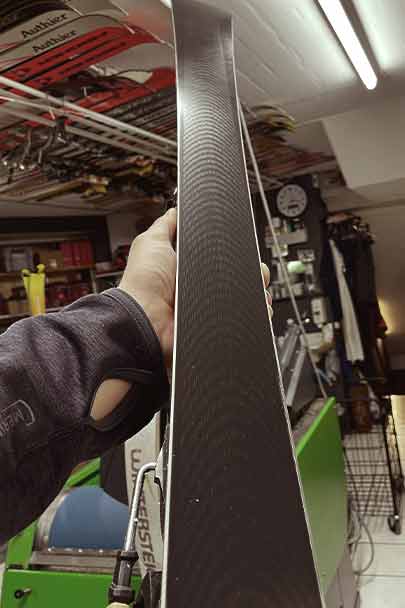
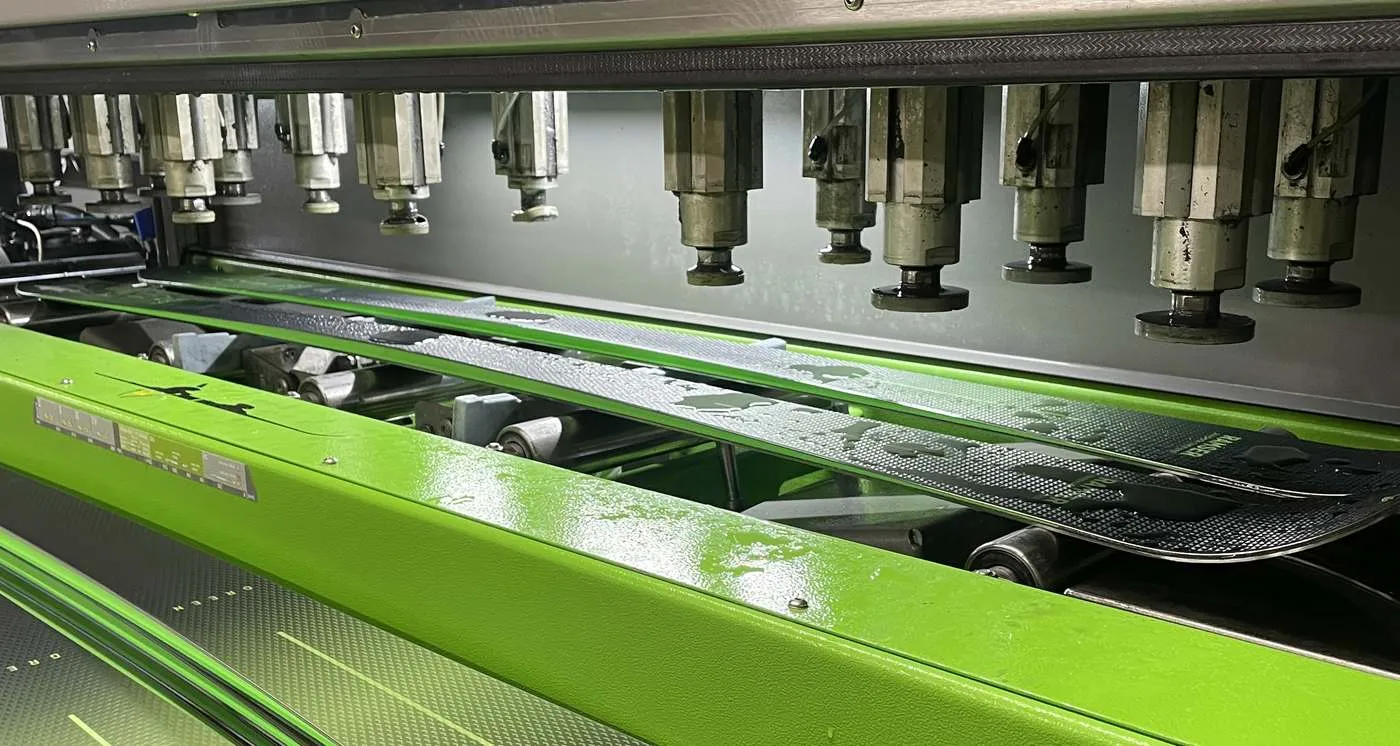
First, the base is sanded flat—that is, restored to a level surface. Deep scratches and gouges are filled with base material beforehand. Next comes the structure: fine grooves that break the film of water between the base and the snow. Without them, the ski sticks to the water like two wet glass panes sticking together. We perform this step using an Wintersteiger Mercury, a stone-grinding machine that runs daily and also processes our own Ramser skis through the workshop.
The right base pattern depends on the snow conditions. In wet, warm snow, a coarser, deeper pattern is advantageous because more water needs to be removed. In cold, dry snow, a finer, shallower pattern glides better. The base pattern isn’t fixed: It’s recreated with every sharpening and can be tailored to your specific use.
Edge grinding: side edges and bottom edges
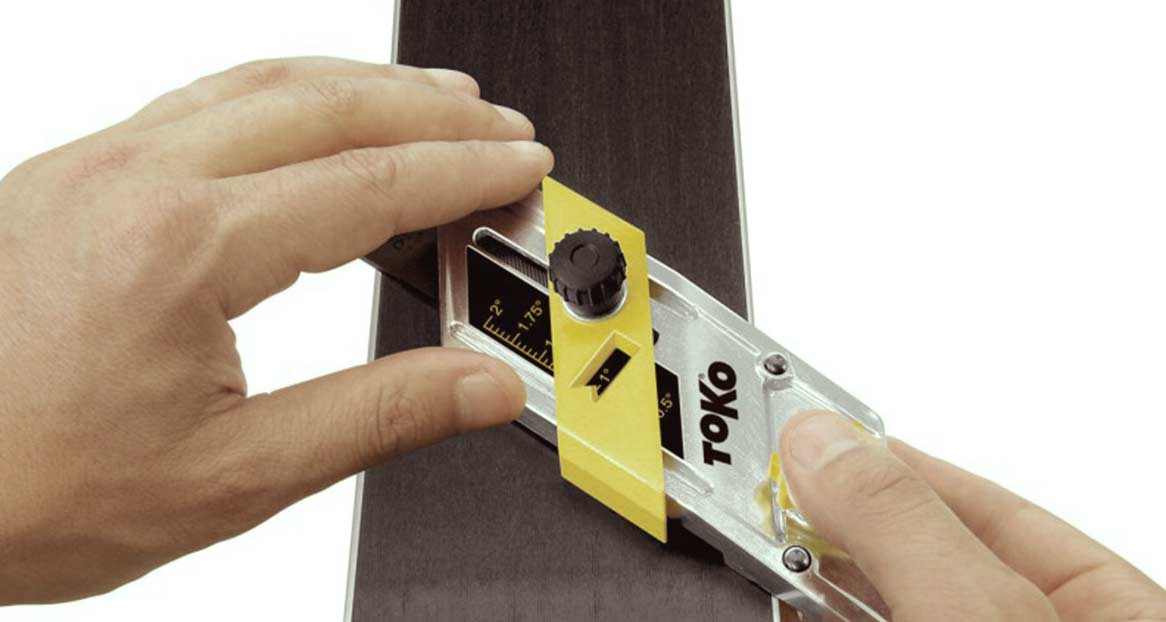
The edge has two angles. The side edge angle determines how aggressively the ski grips, while the bottom edge angle determines how easily it releases from the turn. As part of our standard service, we grind the side edge to 2 degrees and the bottom edge to 1.0 degrees—this works for the vast majority of piste skiers. In the race service, the side edge is ground to 2 to 3 degrees and the bottom edge to 0.5 to 1.0 degrees; the ski then grips earlier and is less forgiving. Finally, the tip and tail are rounded off so the ski doesn’t catch.
Infrared waxing instead of ironing
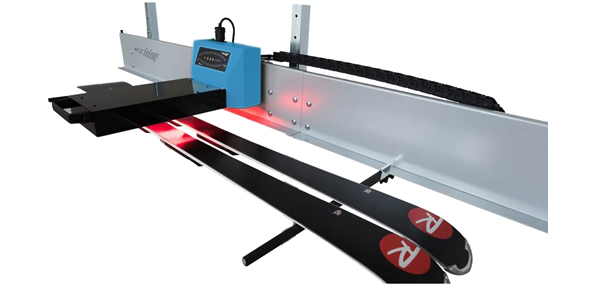
After grinding, the base is exposed and dry—it needs wax. We have an infrared waxing machine for this purpose, and we’re the only ones in the region with one. The difference from an iron: The heat is applied contactlessly and evenly across the entire base, so nothing gets overheated in specific spots. The wax penetrates deeper and lasts significantly longer. Afterward, it’s scraped off and polished.
Every pair of skis that receives the race service is infrared-waxed by us—that’s included in the price. For the standard service, you can add it as an extra if you want the wax to last longer than just the first few days of skiing.
Having your bindings tested is part of the process
Once a year, your bindings should be put to the test. Springs wear out, boot soles wear down, and a Z-value that looks right on paper may no longer be accurate in practice. Don’t try to assess this yourself, and don’t adjust the screws on a hunch: We test the release values on a calibrated device and adjust your ski bindings according to BFU standards. This is also the documentation you’ll need to provide to your insurance company in the event of a claim.
What you can do yourself between service visits
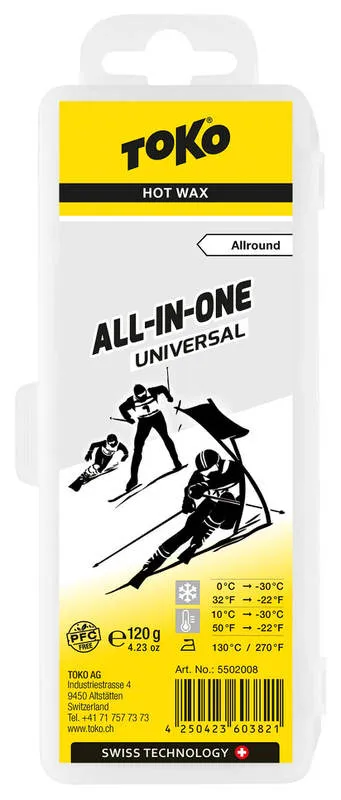
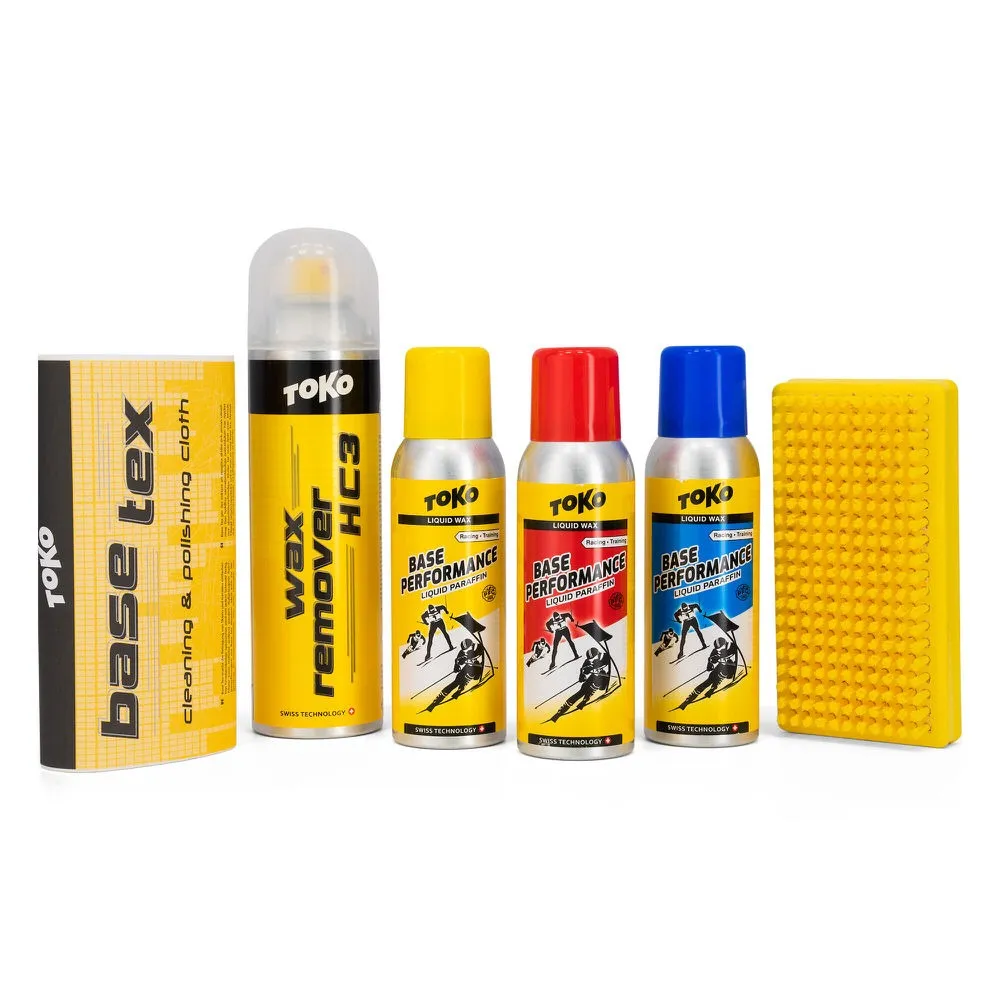
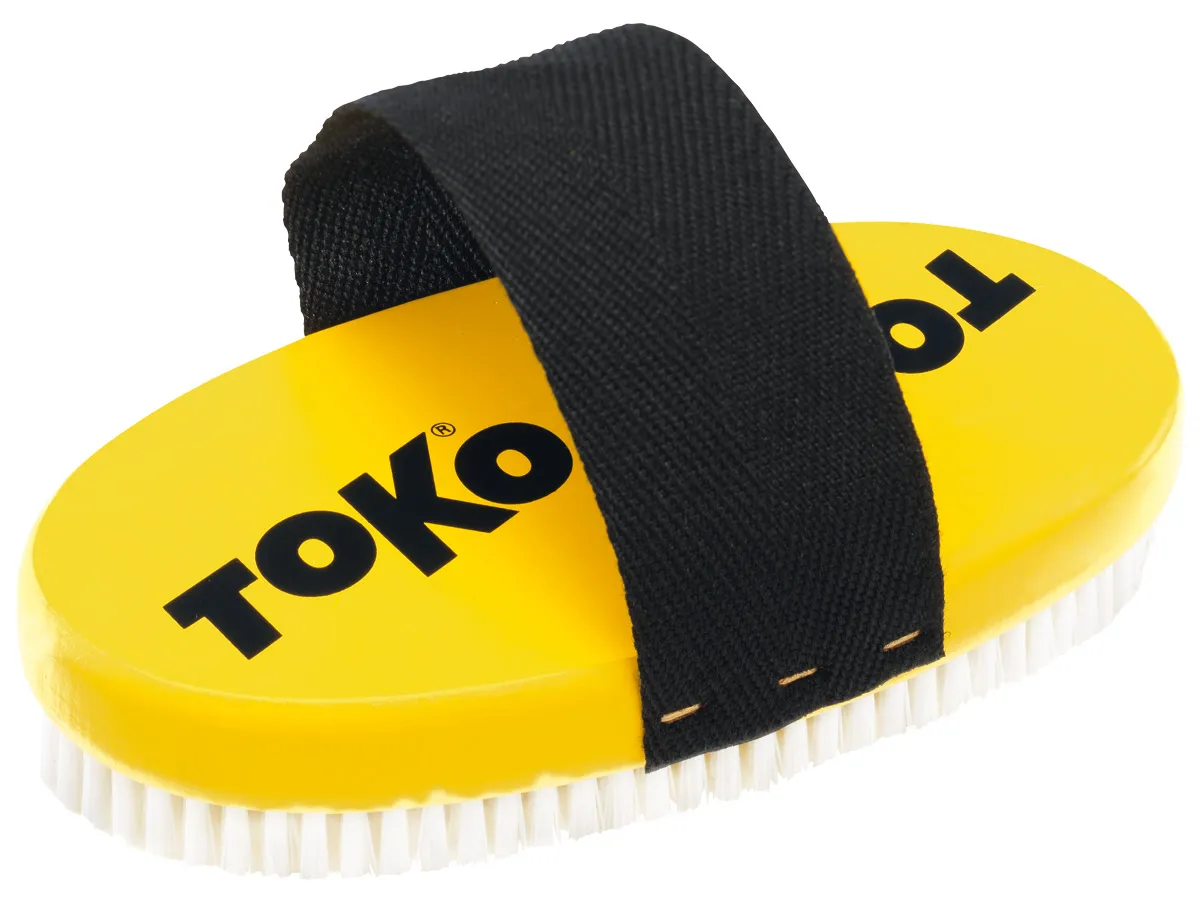
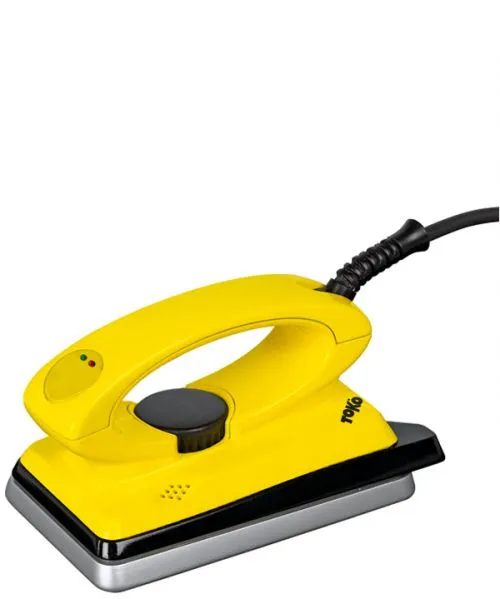
There’s a lot to it, and it’s worth it. Dry the base and edges after every day of skiing; otherwise, rust will set in. You can remove burrs and light surface rust from the edges with a diamond file without immediately wearing down the material. And waxing: A wax iron, a block of hot wax from the ski wax assortment, a scraper, and a brush are all you need. If you’re starting from scratch, get a ready-made wax kit—everything you need is perfectly matched.
What doesn’t belong in the garage: stone grinding, filling deep base damage, and anything related to the bindings. These tasks require specialized machinery and a test bench—and when it comes to bindings, your knees are at stake.
How often do your skis need servicing?
As a rule of thumb: wax every three to five days on the slopes, and have a complete edge sharpening once or twice per season. Plus, schedule two fixed appointments each year. One before your first run, so you don’t spend half the season skiing on dull edges. And once at the end of the season with a thick layer of storage wax, so the edges don’t rust over the summer and the base doesn’t dry out. If you ski a lot on artificial snow or on firn in the spring, you should bring them in more often rather than less.
Frequently Asked Questions About Ski Service
How much does a ski service cost?
Our standard service, which includes base structure, edge sharpening, and hot waxing, currently costs 49 francs; children’s skis up to 140 cm cost 35 francs; and the race service, which includes a wave structure and base repair, costs 80 francs. Snowboards cost 65 francs. The complete list of all additional services is available on the ski service page.
How long does a ski service take?
That depends on how busy the workshop is at the moment. In the fall before the season starts, things usually move quickly, but during the holidays and winter break, you should allow for more time. Give us a quick call or ask in the store, and we’ll let you know exactly.
What are the benefits of infrared waxing compared to regular hot waxing?
More depth and greater durability. With ironing, the heat is applied to specific spots on the base; with infrared, the base is heated evenly along its entire length and absorbs the wax better. It’s standard in the race service; for the standard service, you can book it as an add-on.
Is it still worth getting old skis serviced?
Most of the time, yes. As long as there’s enough base and edge left, a well-groomed old ski will perform better than a new, neglected one. Bring it in, and we’ll take a look and give you an honest assessment of whether it’s worth the effort or if your money would be better spent on a new pair.
My ski boot is too tight—can a service help?
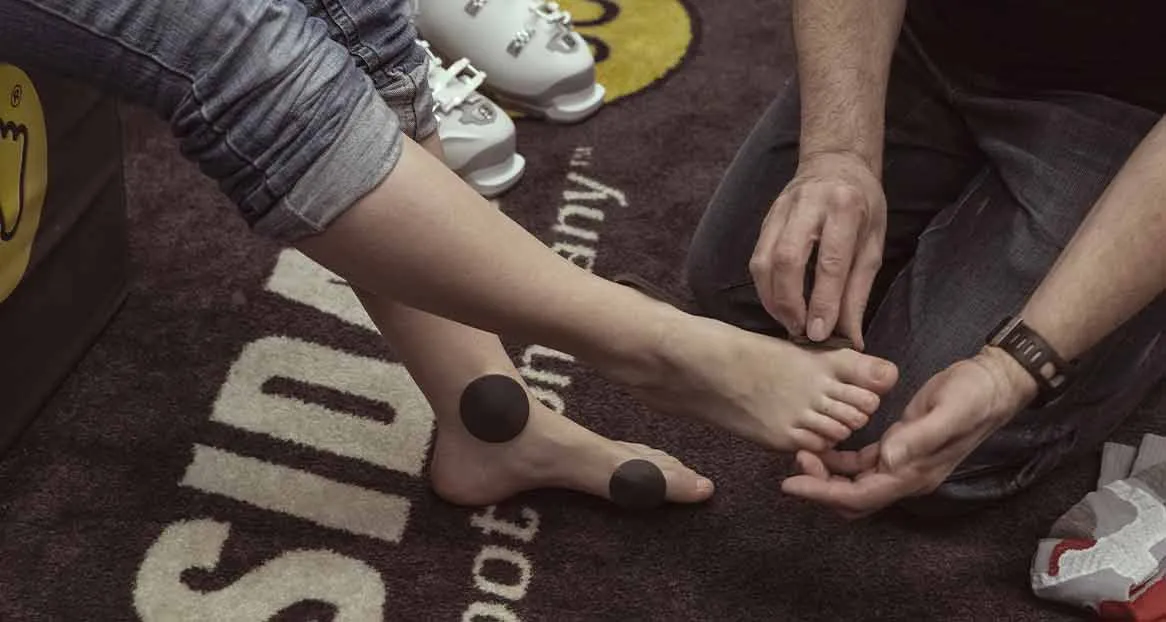
That’s a different issue. We address pressure points, cold feet, or a bunion during boot fitting by widening the boots, milling them, and using custom insoles. We can make minor adjustments to the boots right away as part of the ski service, if you’d like.