Your ski boots are broken in, your skis are freshly waxed, and yet your feet still get cold by the second lift ride. Most of the time, this isn’t due to the boot itself, but to what’s inside it. Socks are the thinnest piece of your gear and have a major impact on how warm and how comfortably you get through a day on the slopes.
The most common mistake is wearing thick hiking socks or even two pairs on top of each other. Neither of these keeps your feet warmer—they actually make them colder. A ski boot has a fixed volume. Anything extra you pack inside puts pressure on your foot and restricts blood flow exactly where the warmth is supposed to come from. The second classic mistake is cotton: It absorbs sweat, barely releases it, and then cools your foot from the inside out.
Choosing the Right Ski Socks: Padding, Material, and Fit
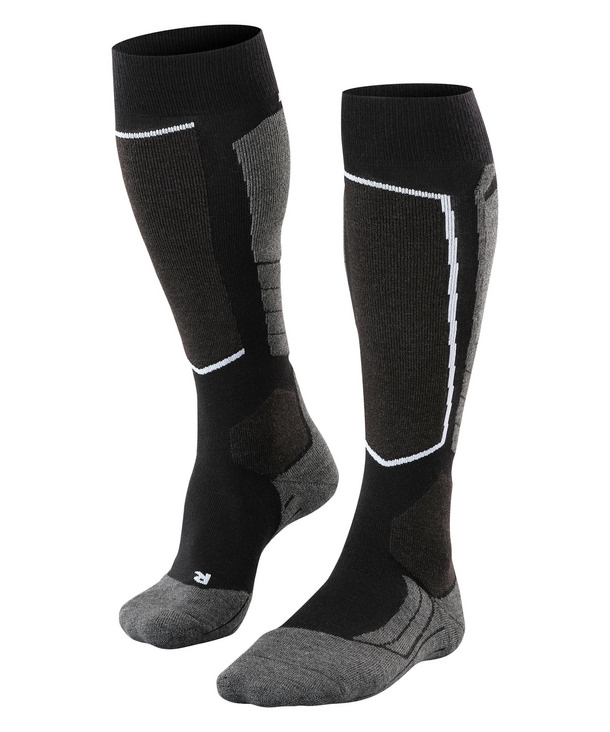
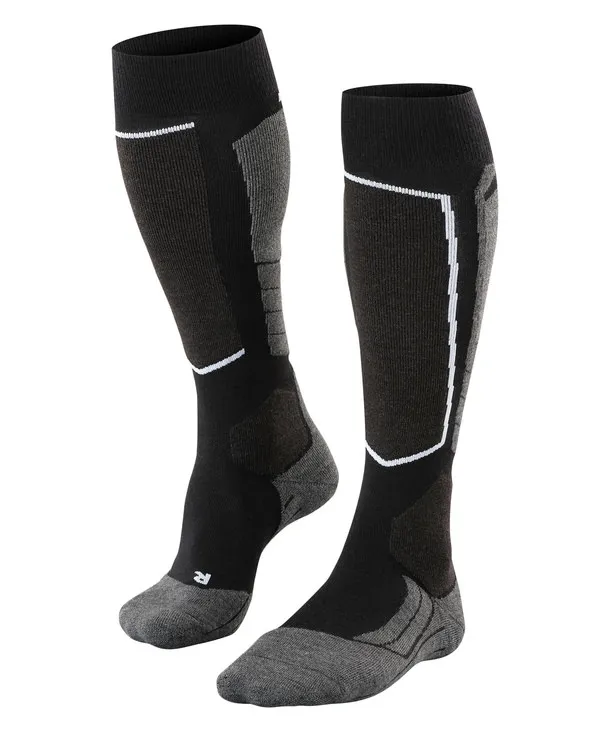
A good pair of ski socks is surprisingly thin, fits without wrinkles, and has padding exactly where the shell presses: on the shin, the instep, and the heel. Anything else is just fabric getting in the way. Three things determine which model is right for you.
Padding: More fabric doesn’t mean more warmth
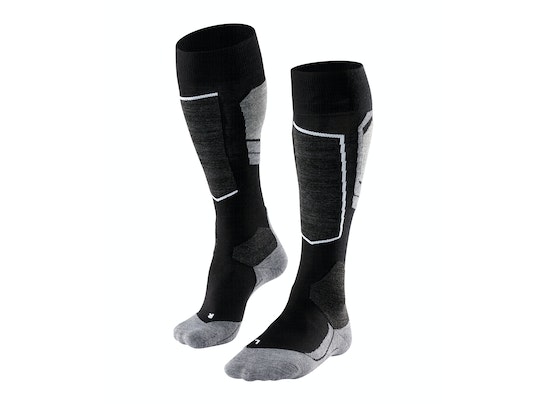
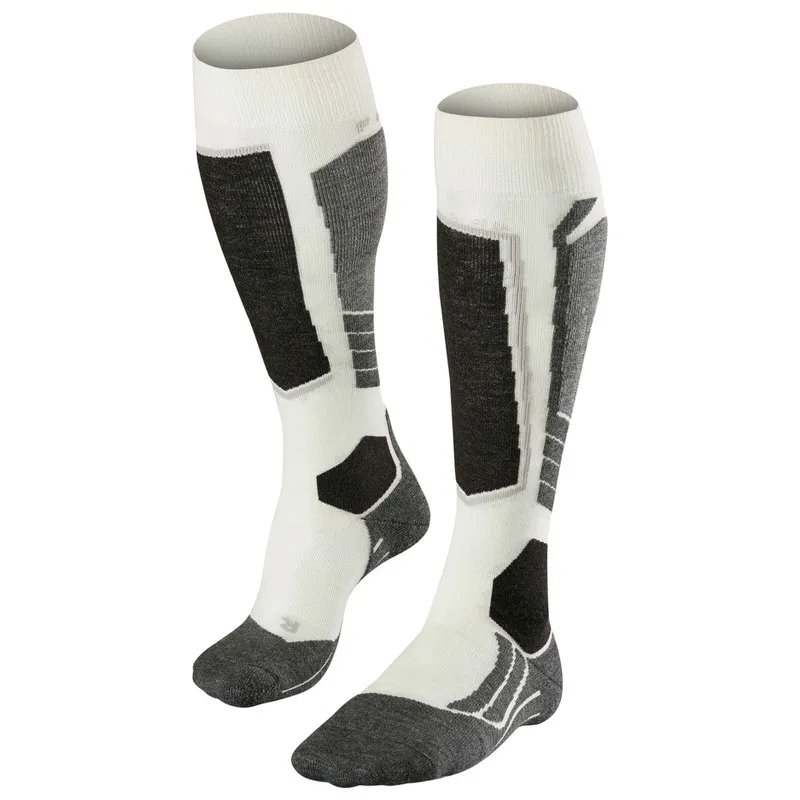
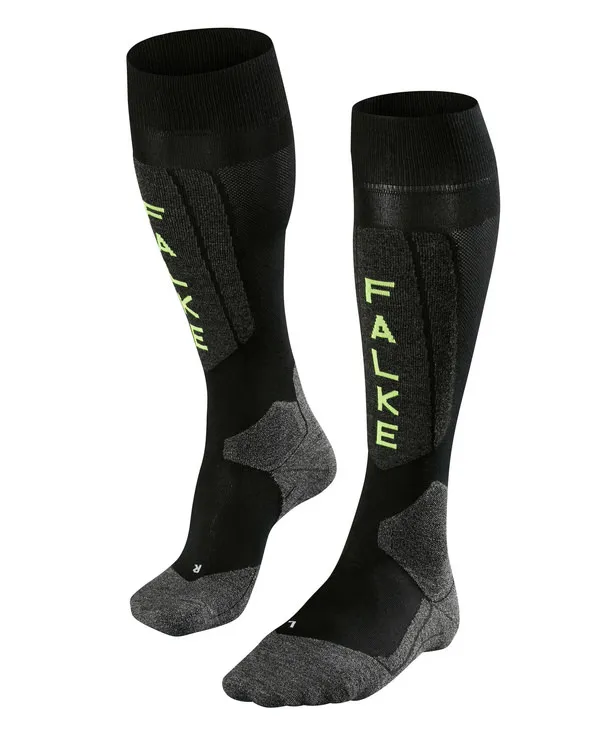
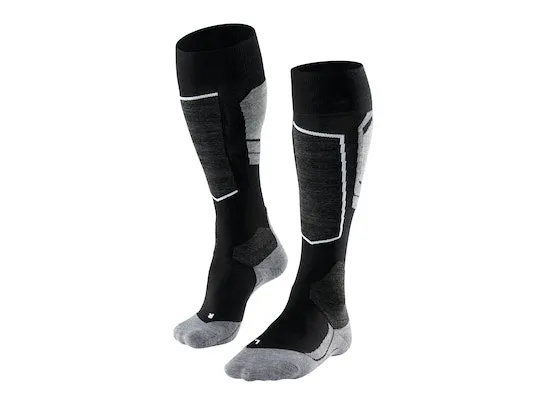
The padding determines how directly you stand in the boot. The thinner the sock, the more directly every movement is transmitted to the ski. More padding means more comfort and protection, but also more wiggle room in the boot. With Falke’s ski socks, you can clearly see this principle at work, and the number in the name isn’t a thickness scale: The SK2 is the medium-padded all-rounder for recreational skiers; the SK4 and SK5 are significantly thinner and designed for custom-fit boots; and the SK7 Race is ultra-lightweight for maximum control.
- √ You ski at a leisurely pace and like to stay warm: medium padding
- √ You have a custom-fitted or tight boot: light to ultra-light padding
- √ You ski aggressively or race: as thin as possible
- √ The cuff presses against your shin: choose a model with targeted shin padding instead of a thicker sock
Merino wool or synthetic fiber
Merino wool keeps you warm even when the socks are damp and smells significantly less after a long day. Pure wool wouldn’t be durable enough, which is why almost all manufacturers use blends of merino wool and synthetic fibers. Pure synthetic fibers dry faster and are more abrasion-resistant, but they’re less effective at preventing odors.
- √ Merino blend: warm, odor-resistant, comfortable for cold feet
- √ Synthetic fibers: dry quickly, durable, good for sweaty feet
- √ Cotton: does not belong in ski boots
Length, fit, and what else is inside the boot
Ski socks are knee-highs, and there’s a reason for that: The cuff must end above the top of the boot, otherwise the edge will chafe your calf. Also, look for styles that are knitted differently for the left and right feet. Any crease in the boot will become a pressure point after three hours. If you’re wearing long ski underwear, smooth the pant leg under the socks or opt for a shorter style.
- √ The cuff should sit above the boot shaft, never below it
- √ Knitted differently for the left and right feet, if available
- √ Put them on wrinkle-free and adjust them again before fastening the boot
- √ A fresh pair for every day of skiing
Ski Socks for Kids
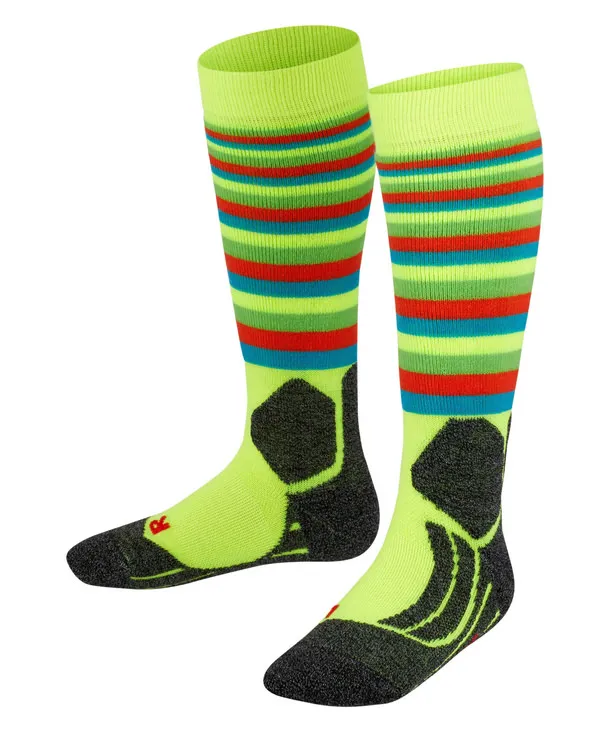
When it comes to children, thick wool socks are the most common choice—and that’s exactly what makes their feet cold. Children’s ski boots are tight; there’s simply not enough room. A thin ski sock in the right size that doesn’t bunch up clearly works better. If the foot still gets cold, it’s usually because the boot is too small or too big—not because of the sock.
Ski Socks for Ski Touring
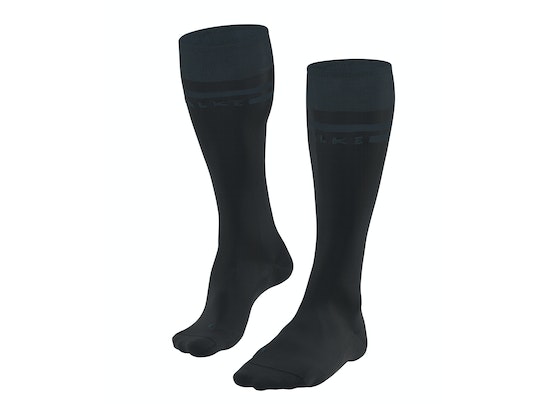
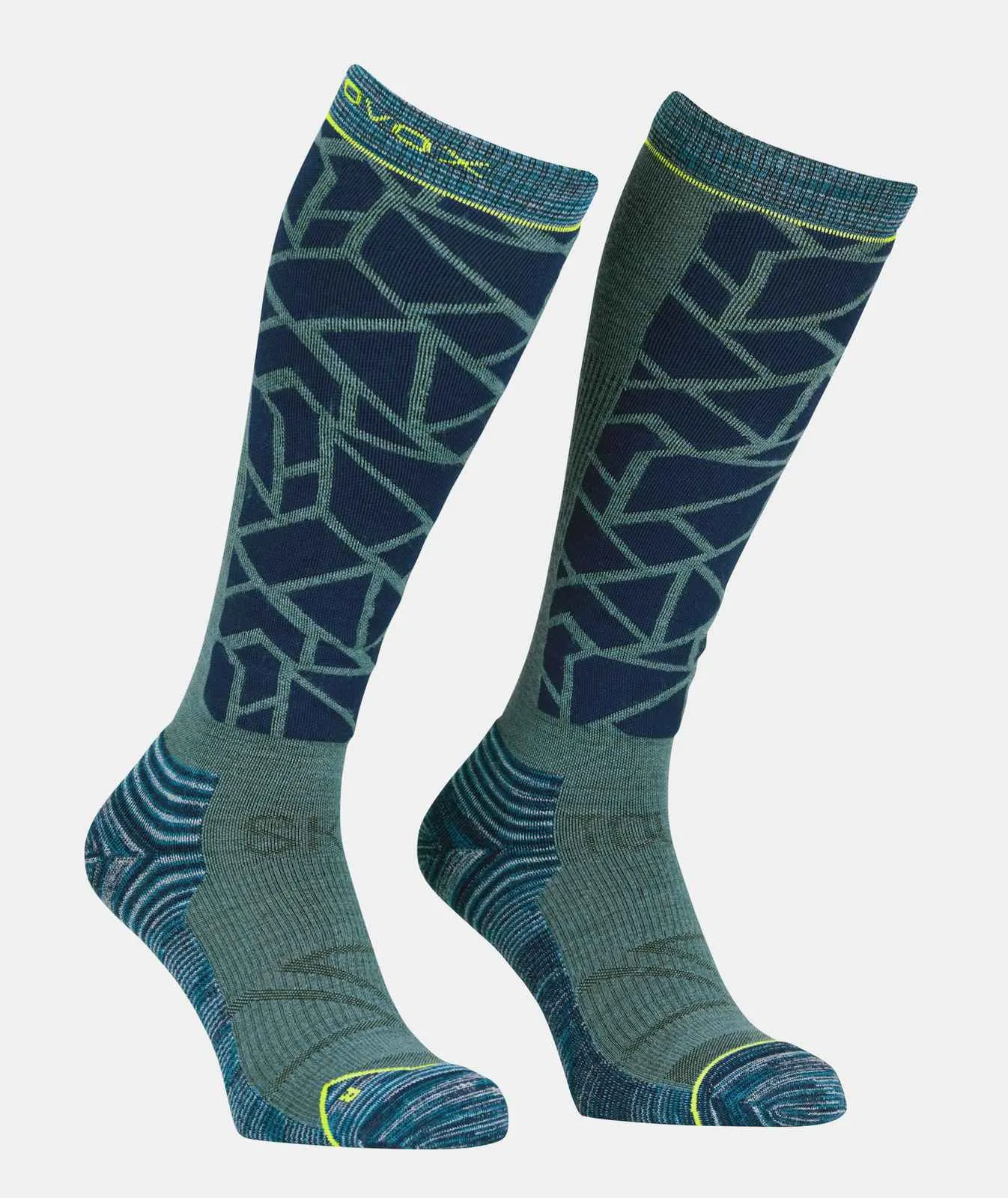
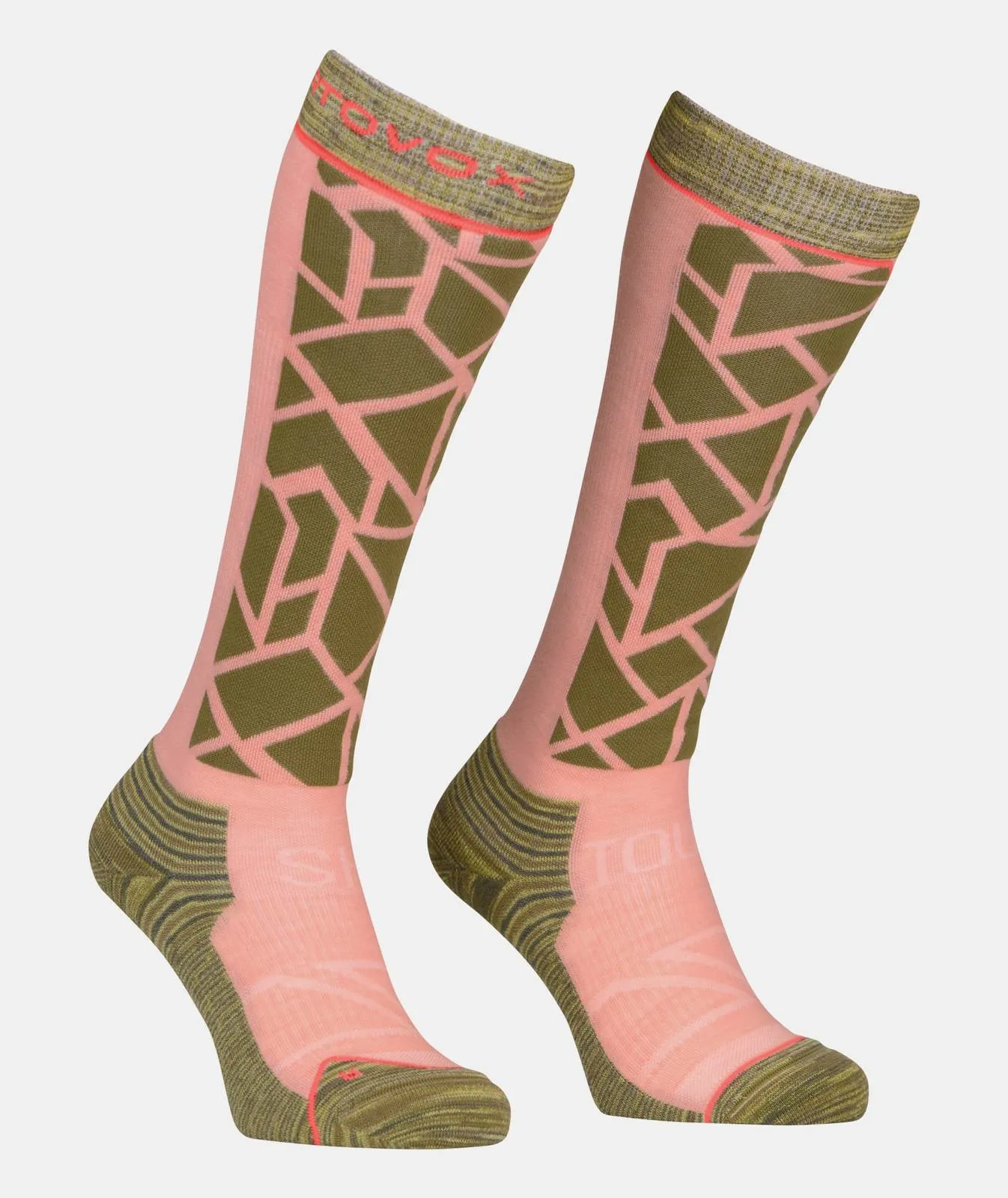
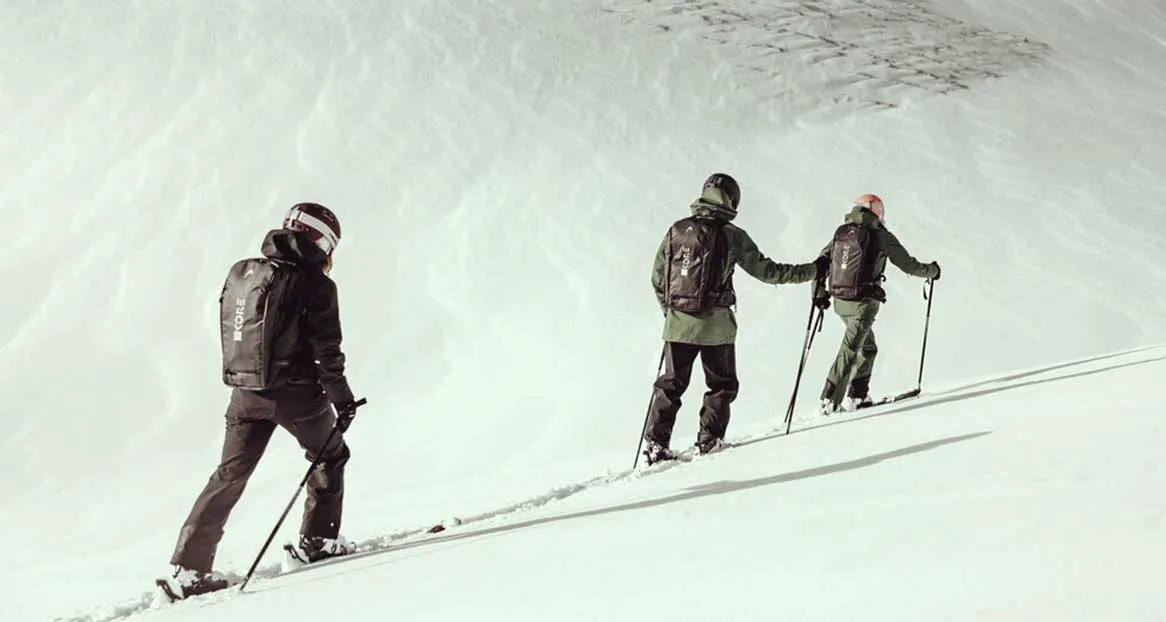
Your feet sweat during the ascent and cool down during the descent. That’s why touring models prioritize high moisture-wicking and, in some cases, light compression to support the calf muscles. The Ortovox Ski Tour Comp Long Socks are a prime example: pre-shaped, with merino wool, an elastic double cuff, and a stabilizing zone at the ankle to keep them from slipping.
Washing and drying
Wash them at 30 to 40 degrees and follow the care label instructions. Don’t use fabric softener—it coats the fibers and actually hinders the moisture-wicking performance you paid for. A special detergent for technical clothing is the better choice. Air-dry merino wool instead of drying it on a heater. And the boots themselves should be opened up and thoroughly dried after each day—the fastest way is with a boot dryer.
If your feet still get cold
Some feet just won’t stay warm, even with the best socks. In that case, technology is the answer, not fabric: heated socks or a ski boot heater that can be installed in your existing boot. Both are better solutions than wearing thicker socks, which usually make the problem worse. If, on the other hand, the boot pinches in a specific spot or your foot regularly goes numb, that’s a matter for a boot-fitting session at the shop—not for buying a new pair of socks. Always bring the socks you actually wear while skiing to the fitting; otherwise, the fit won’t be right afterward.
Two to three good pairs will last you through a normal season: that way, you can wash them in between and never start out in damp socks. You’ll find the entire selection in the ski socks section at ski-shop.ch, and if you’re looking to stock up for hiking or everyday use, take a look at socks overall.
Frequently Asked Questions About Ski Socks
Is it a good idea to wear two pairs of socks in your ski boots?
No. Two pairs take up too much space in the boot, put pressure on the foot, and impair blood circulation. The result is colder feet, not warmer ones. One well-fitting pair is enough.
How thick should a pair of ski socks be?
As thin as comfort allows. For custom-fitted boots, light to ultra-light padding is ideal; for recreational boots, medium-thick padding with shin and instep protection is acceptable.
Merino or synthetic fiber—which is better?
A blend of both. Merino provides warmth and minimizes odor, while synthetic fibers offer abrasion resistance and quick-drying properties. Pure cotton is definitely the wrong choice for ski boots.
Can you put ski socks in the dryer?
It’s best to avoid models with a high merino wool content, as they can shrink and lose elasticity. Air-drying is safer. Always follow the care label instructions.
How often should I change my ski socks?
Every day on the slopes. A sock that still has residual moisture from the previous day cools your foot right from the start and increases the risk of pressure points and blisters.
Do ski socks also work with snowboard boots?
Yes. Snowboard boots are softer and require less shin protection, but the basic rules remain the same: thin, wrinkle-free, no cotton, and a fresh pair every day.