Cold fingers are the most common reason why a day of skiing ends earlier than planned. Not your legs, not the weather—your hands. And most of the time, it’s not because the glove was too thin. It was too tight, damp on the inside, or too short at the cuff. Once you understand where the warmth in a glove actually comes from, you’ll be able to shop with much more confidence next time.
When skiing, the conditions are unfavorable: Your hands barely move—they’re gripping the poles—the wind blows over them, and you sit still on the chairlift for twenty minutes. As soon as it gets cold, the body reduces blood flow to the fingers first. So the glove must fulfill three functions at once: insulate, stay dry, and not constrict the hand.
Buying Ski Gloves: What Really Matters
Three things matter most; everything else is a matter of comfort: the design, the insulation, and the fit. The range of ski gloves includes everything from thin racing gloves to leather mittens. Choosing the right pair becomes easy once you know which direction to go.
Mittens or Finger Gloves
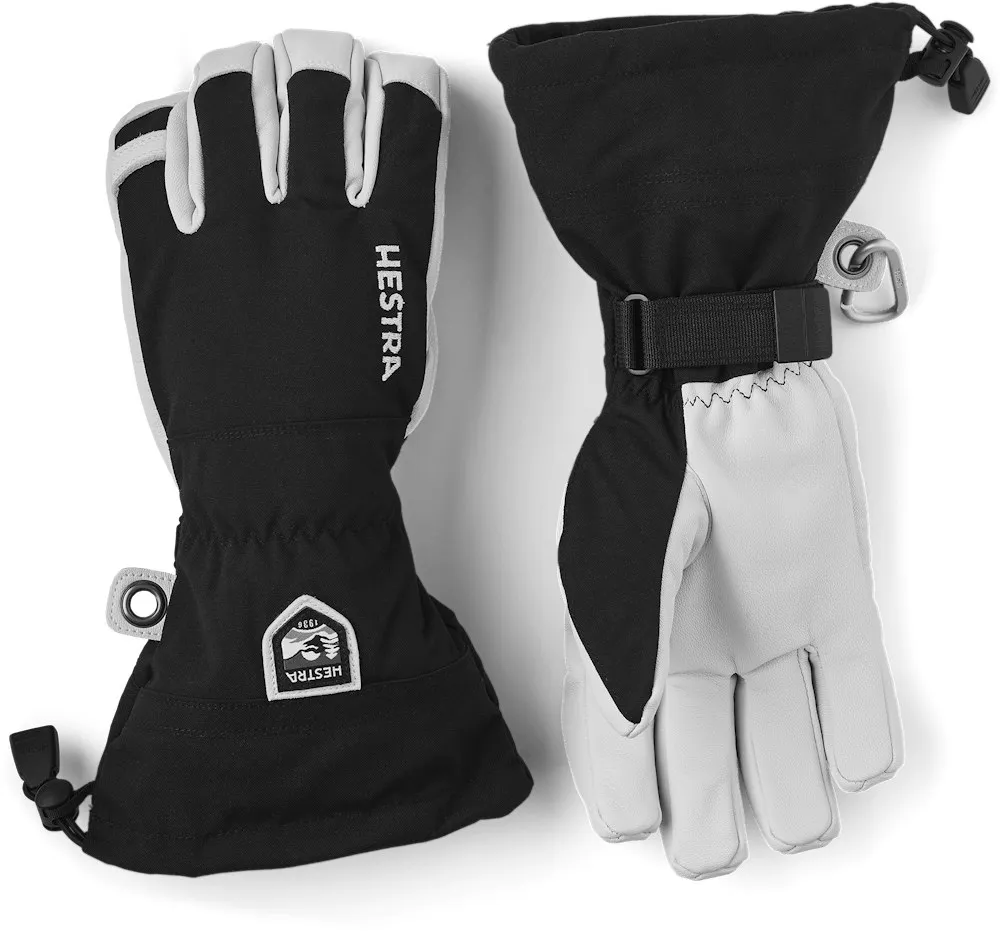
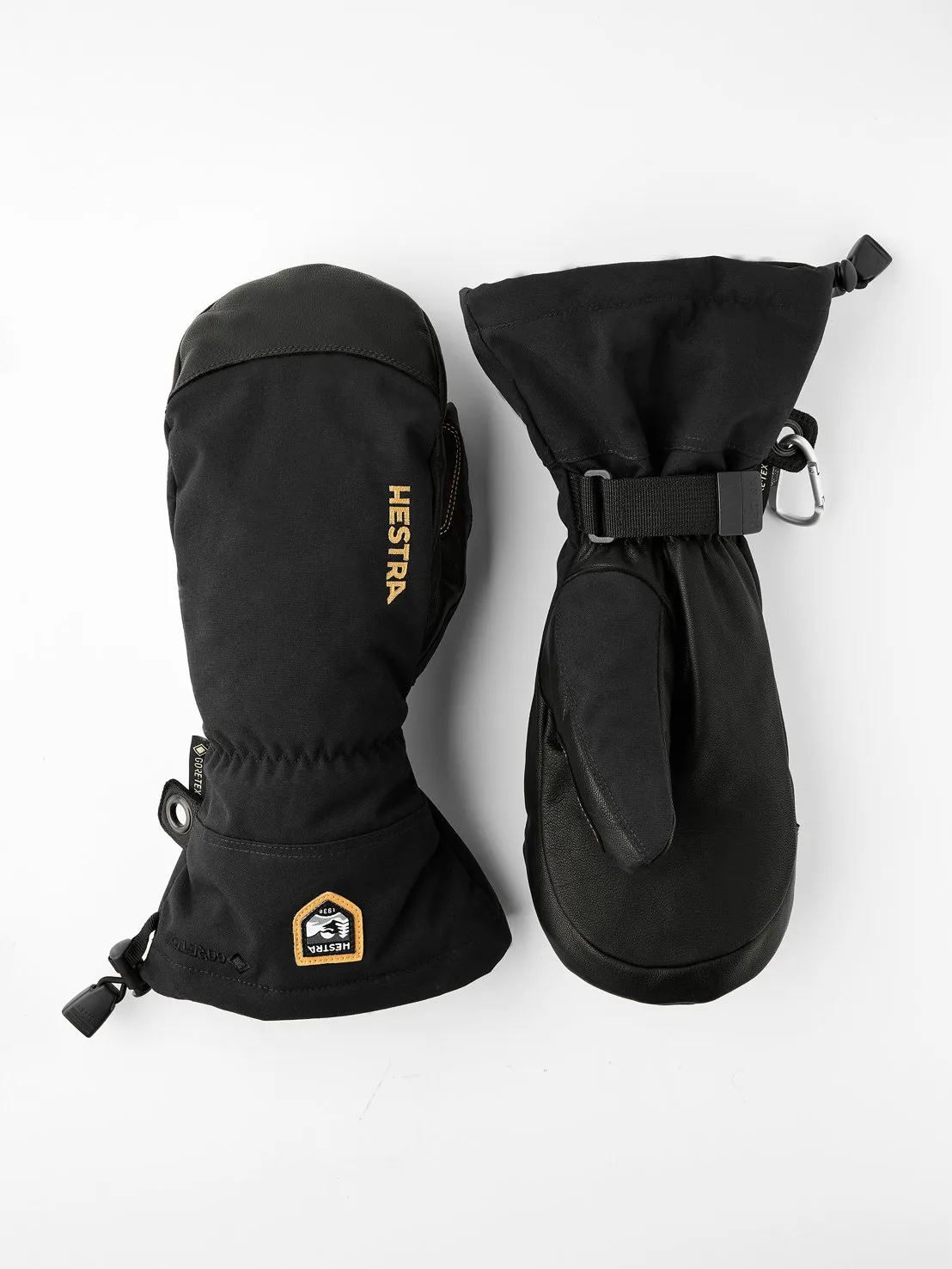
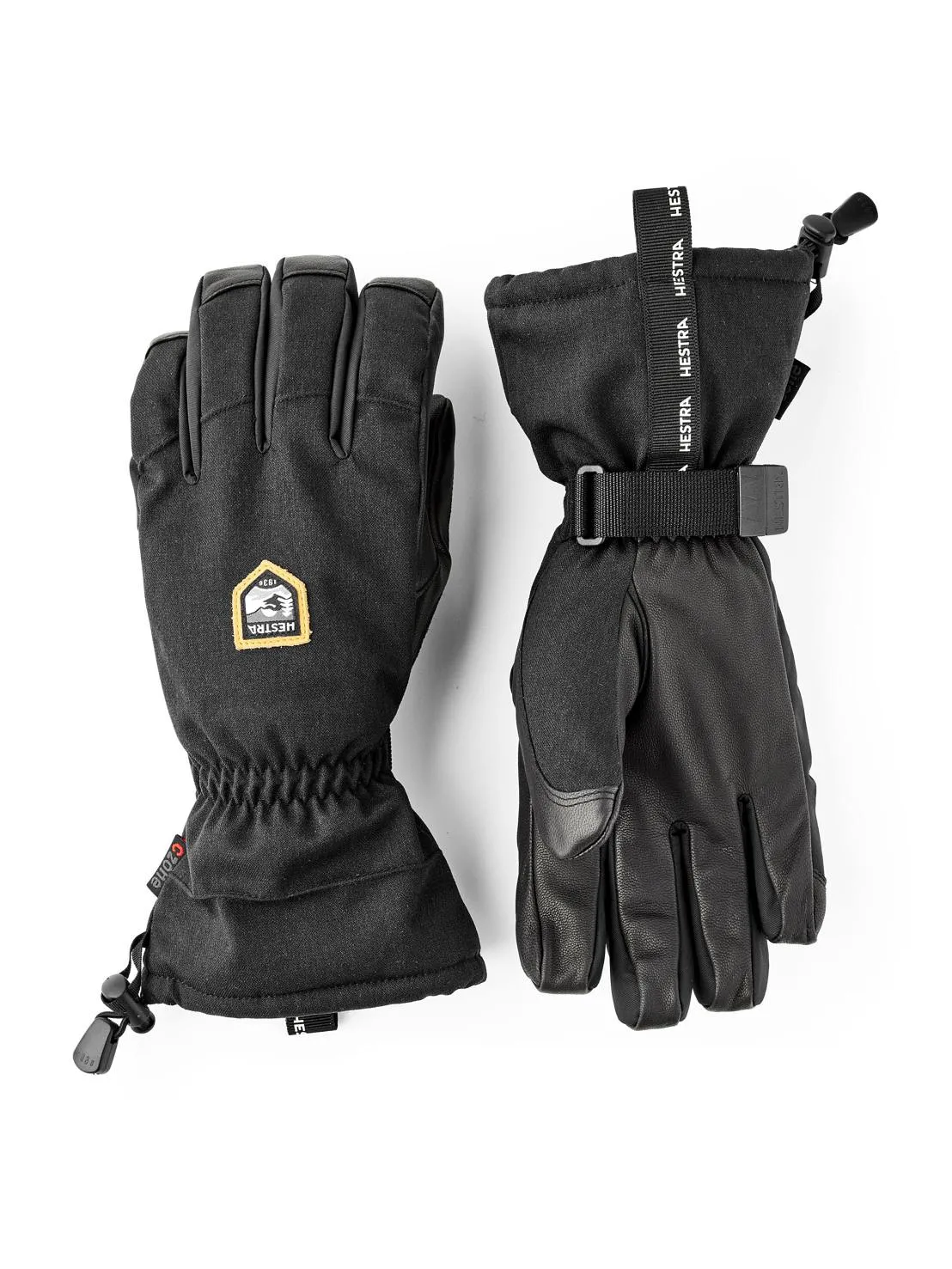
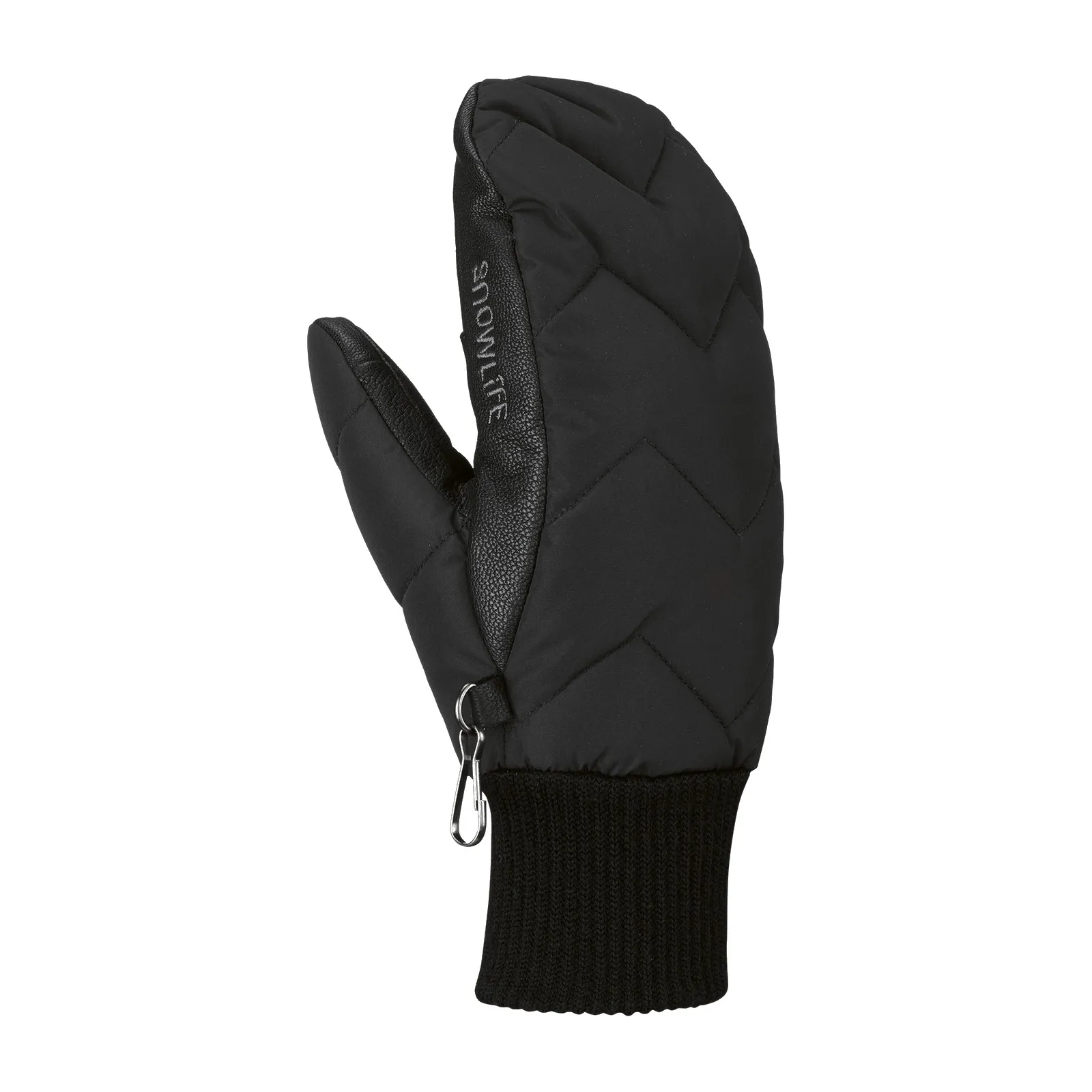
A mitten is always warmer than a fingered glove with the same insulation. The fingers are close together and keep each other warm, rather than each one fighting the cold on its own. You’ll have to sacrifice some fine motor skills: zippers, ski passes, ski boot buckles—everything becomes a fiddly task. The three-finger glove is the compromise: the index finger and thumb remain free, while the rest of the fingers share the warmth. That’s exactly why Hestra makes the Army Leather Heli Ski in all three styles.
- √ Mittens: warmest, least sensitivity in the fingers
- √ Three-finger gloves: almost as warm, but you can still grip things
- √ Five-finger gloves: full range of motion, require more insulation for the same level of warmth
If you ski with poles that have a trigger mount, you can skip the classic strap entirely. You can find out how that works in the article on ski gloves with a trigger system.
Warm Ski Gloves: Insulation Makes All the Difference
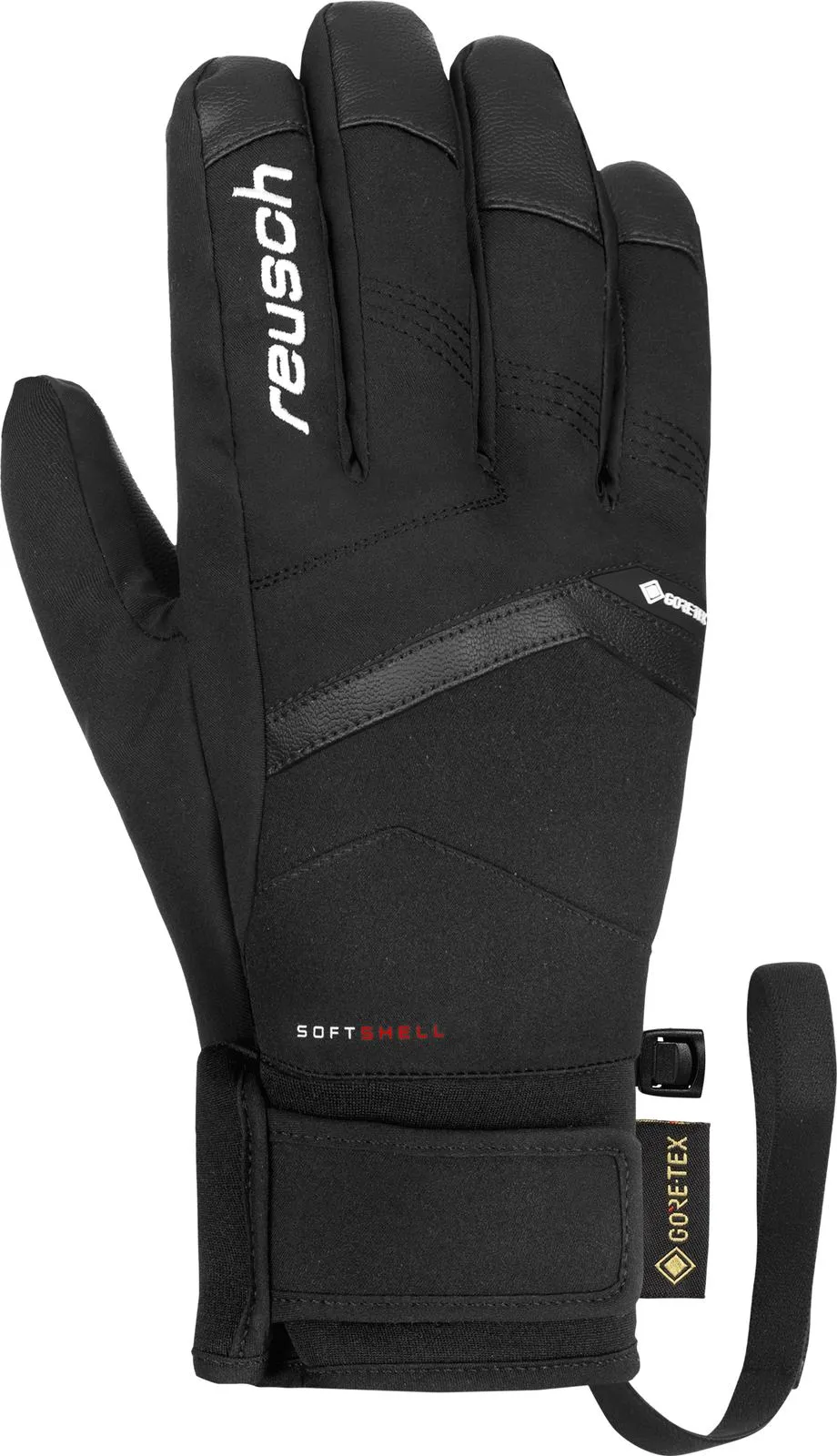
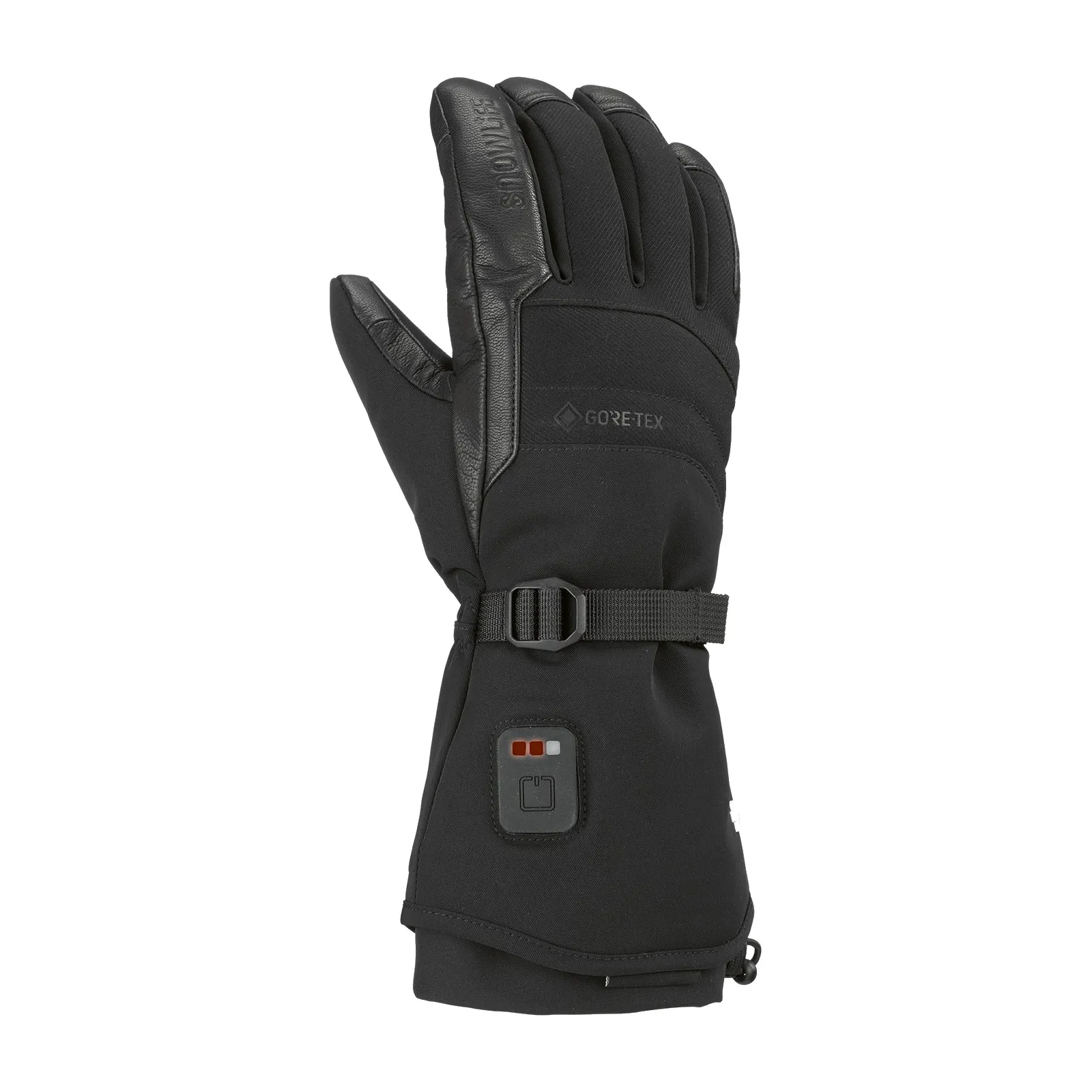
Warmth isn’t generated by the material itself, but by the air it traps. The more still air there is between your hand and the outside world, the better. Therefore, what matters less is the brand of the filling and more what it does when it gets wet. Synthetic fillings like PrimaLoft Gold or G-Loft continue to insulate even when sweat or snow comes into play, and they dry quickly. Snowlife uses Re:Wool made from recycled wool in its Heat GTX line, while Reusch uses either TecFill or R-LOFT, depending on the model.
For a typical day on the slopes, a medium level of insulation is sufficient. If you spend a lot of time sitting on the lift or generally have cold hands, go one size warmer. And if you’re hiking up the mountain and working up a sweat, you’ll be better off with less insulation plus a thin pair of liner gloves in your backpack than with the thickest model on the shelf.
Waterproof Ski Gloves: Membrane and Leather
Wet means cold—and that’s even more true for gloves than for jackets. A membrane keeps water out while allowing moisture to escape from the inside. Common options include Gore-Tex—now often available in a PFC-free ePE version—as well as proprietary membranes like CZone from Hestra and R-Tex XT from Reusch. It’s less important which one is used than the fact that there’s one at all if you’re often out in snowfall or wet snow.
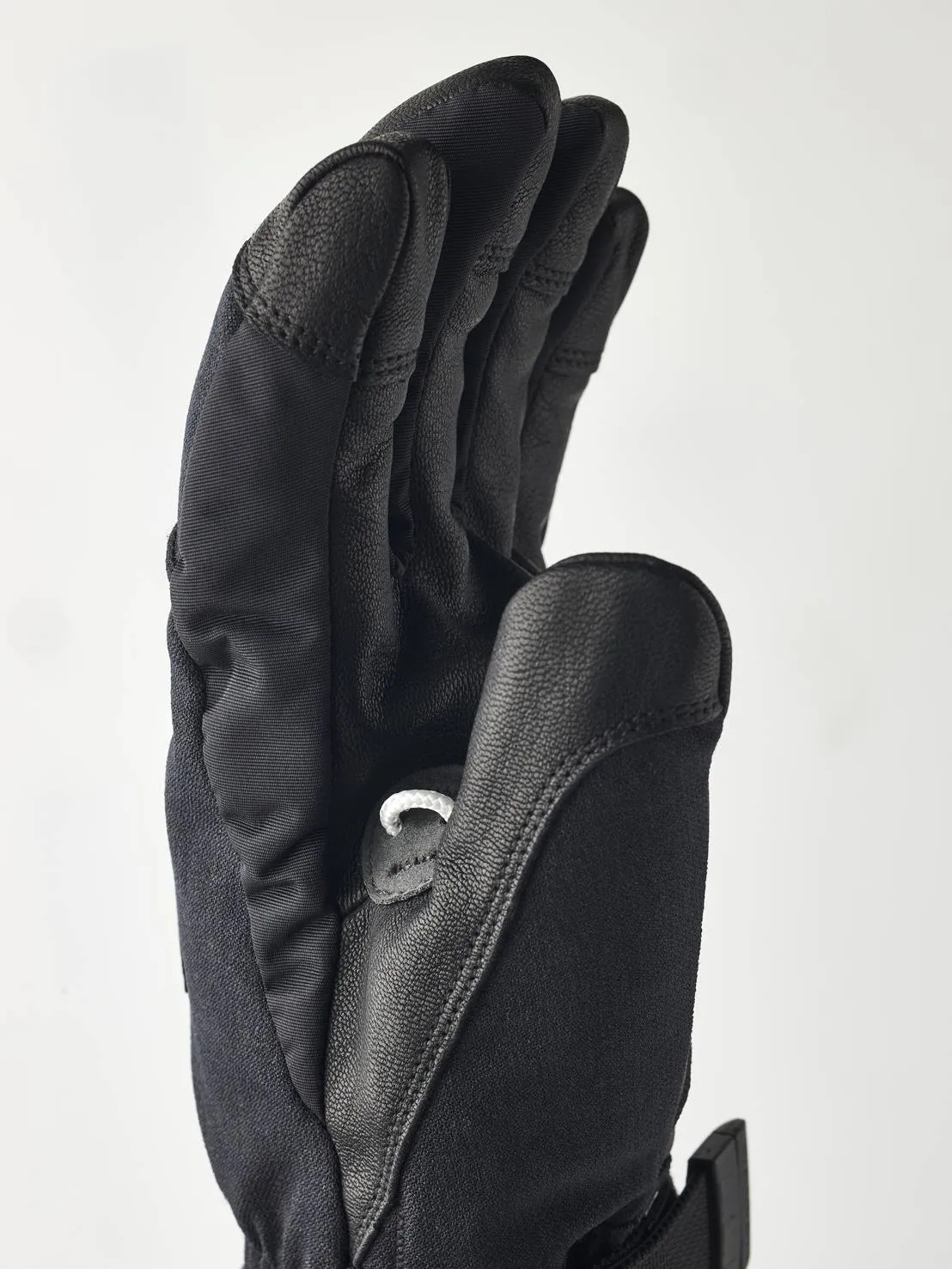
Leather is the other half of the answer. Goatskin on the palm provides grip on the pole, takes up hardly any space, and will last for years if you take care of it. Models like the Army Leather Heli Ski also have a removable lining that you can dry separately. Pure softshell is lighter and more affordable, but it wears out faster when in contact with the pole.
The Right Size: Wrist Circumference Instead of Gut Feeling
Glove size is the circumference of your hand in inches, measured with a tape measure around the palm without the thumb. About 23 centimeters corresponds to size 9. There should be a few millimeters of space left before the fingertips: A glove that feels tight and snug restricts blood flow and causes exactly the cold hands you want to avoid. A little space keeps your hands warm, but too much space makes them cold because your hand can no longer warm the interior of the glove.
Another point that’s often overlooked: the cuff. The short version tucks under your jacket sleeve and is easy to use, while the long cuff extends over your jacket and keeps snow out if you fall or are skiing in deep snow.
Women, Men, and Children
Women’s models aren’t just smaller; they have a slimmer cut, different finger lengths, and often a bit more insulation. If a men’s model in the right size is loose across the palm, the women’s cut is usually the better choice—and vice versa.
For children, two things matter more than anything else: a long cuff that extends over the jacket sleeve and a strap to keep the glove from getting left behind in the snow when taking it off. Small children are almost always better off in mittens. And it’s better to have a little extra room at the fingertips than a pair that fits perfectly but is too small by February.
Heated gloves for chronically cold hands
If, despite good insulation, your hands are still frozen after an hour, it’s not a matter of discipline but of blood circulation. That’s when heated gloves come in handy: heating wires run across the back of the hand all the way to the fingertips, with a rechargeable battery at the cuff, usually offering three heat settings. The Heat GTX from Snowlife in Malans runs on two 4,000-mAh batteries for up to eight hours. A more affordable option without electronics is a mitten that has a zippered pocket for a heat pack.
Care: How to Make Your Gloves Last Several Winters
Dry gloves at room temperature, with the lining removed and the opening facing down—never directly on a radiator. Heat makes leather hard and brittle. Leather should be conditioned once or twice per season, and the outside benefits from a fresh coat of waterproofing. For detailed instructions, see the article “Hestra: Caring for Gloves.”
Frequently Asked Questions About Ski Gloves
Are mittens really warmer than gloves?
Yes. With comparable insulation, mittens are warmer because the fingers warm each other and less surface area is exposed to the cold. However, you lose dexterity. Three-finger gloves fall somewhere in between.
What size should I get for ski gloves?
Measure the circumference of your palm (excluding your thumb) with a measuring tape. The measurement in inches is your size; about 23 centimeters equals size 9. There should be a few millimeters of space left before the fingertips.
Why do I have cold hands even though my gloves are thick?
Most of the time, they’re too tight or damp on the inside. Both of these things prevent heat from escaping. Check the size, let the gloves dry thoroughly overnight, and don’t wear them over wet liner gloves.
Are heated ski gloves worth it?
For anyone who regularly feels cold despite wearing a warm pair, yes. For the occasional day of skiing at zero degrees, a well-insulated glove is sufficient. Models with a pocket for hand warmers are a good middle ground.
Can I put ski gloves in the washing machine?
Fabric gloves: usually yes, on the gentle cycle and without fabric softener, but check the label. Leather gloves do not belong in the washing machine; they should be washed by hand and then conditioned.