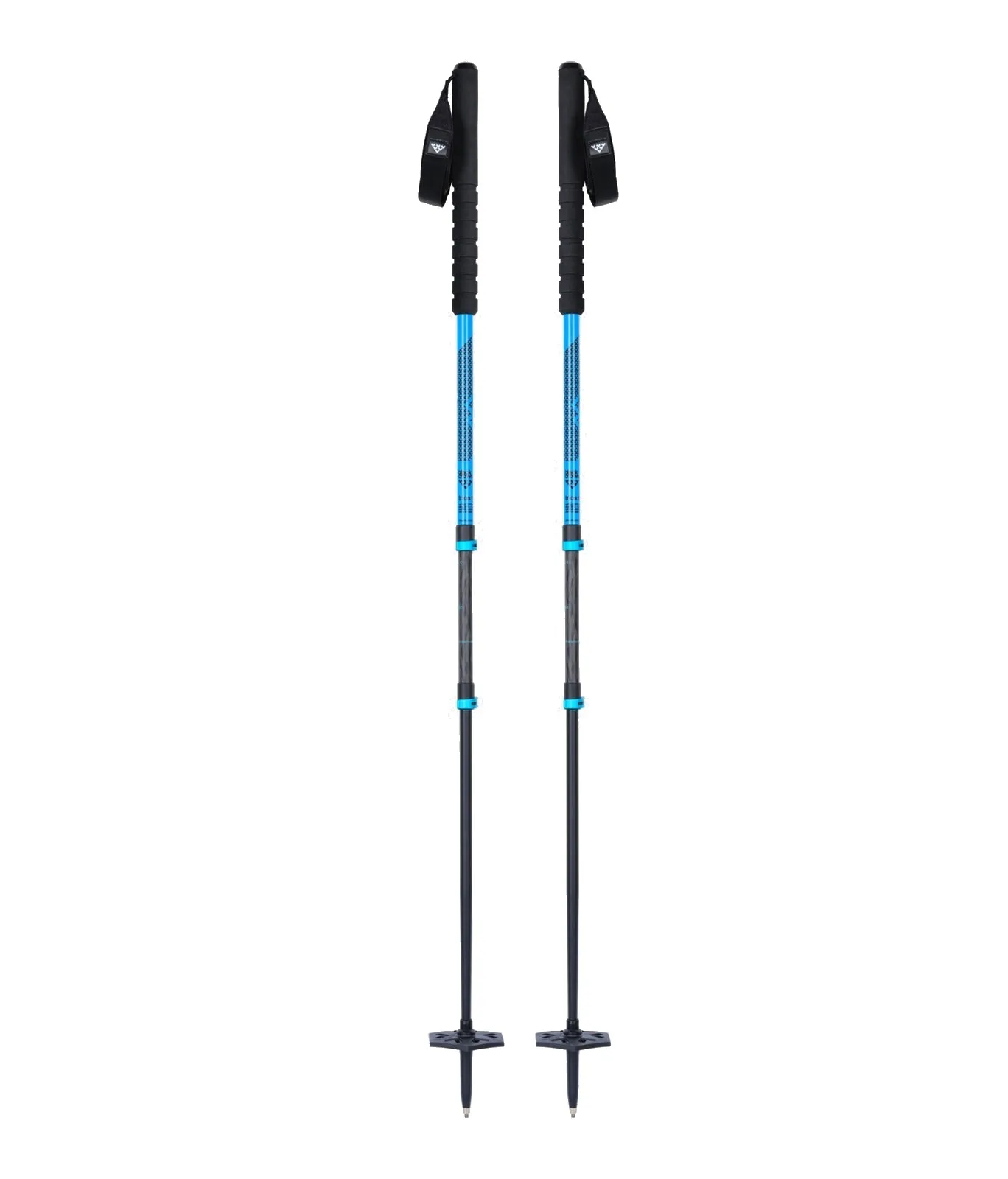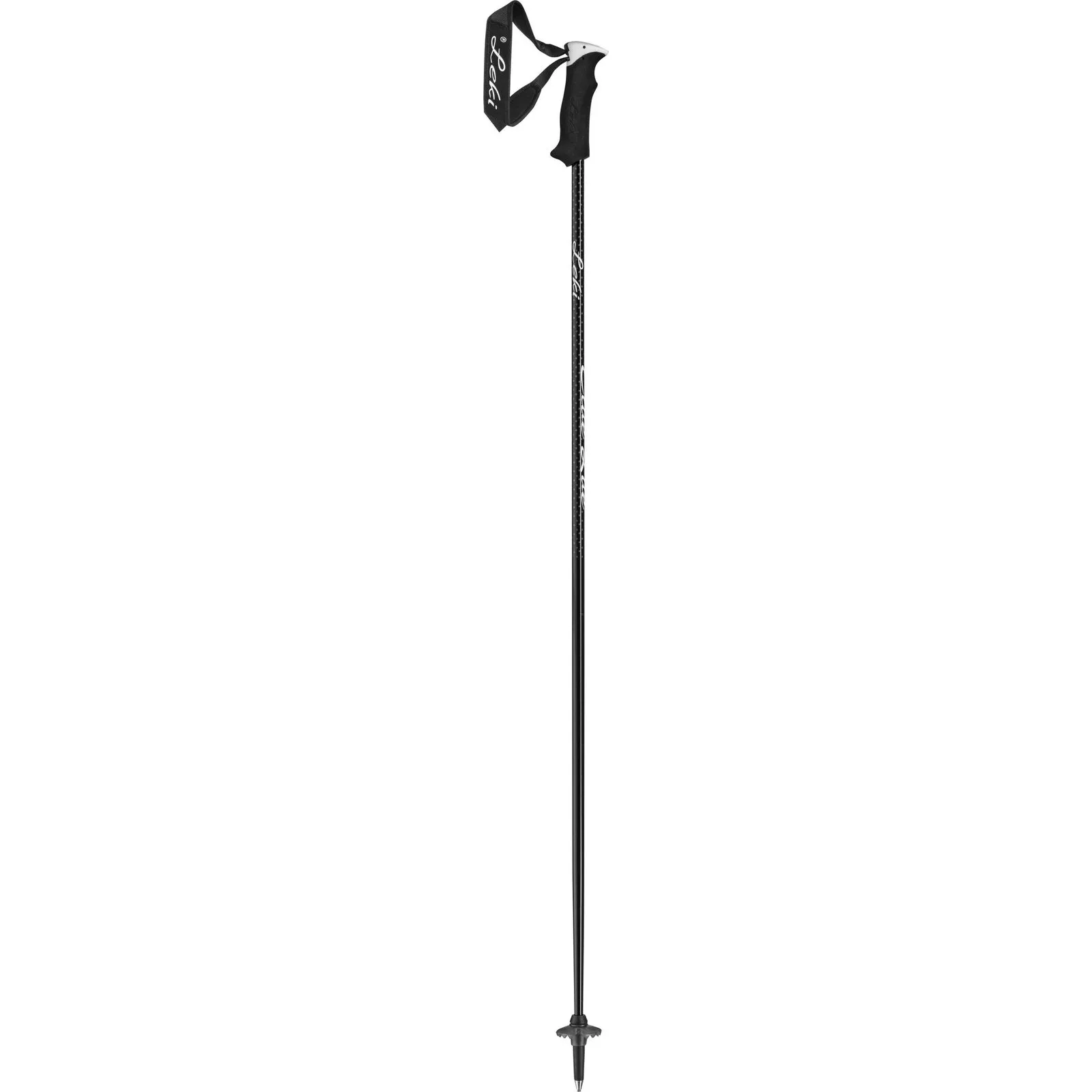
When buying gear, ski poles usually get the last five minutes of your attention. You’ve carefully considered your skis, boots, and helmet, and then, as you’re walking by, you grab the first pair you see that matches the color scheme. It’s a shame, really, because the pole sets the pace: They set the rhythm in turns, provide stability on steep terrain, and help propel you uphill. A pole that’s the wrong length throws you off balance, a basket that’s too small sinks into the powder, and a strap in the wrong place can really hurt if you fall.
The good news: You don’t have to be an equipment expert. Three things determine whether a pole is right for you, and you can figure all three out in just a few minutes.
Find the right ski pole length in 30 seconds
Turn the pole upside down and hold it below the basket. Keep your upper arm close to your body. If your elbow now forms a right angle, the length is correct. If you want to be precise, do the test with your ski boots on and on a hard surface, because the sole of the boot adds a few more centimeters.
As a starting point for ski pole length, use this guide; poles are available in 5-cm increments:
- √ Height under 170 cm: usually 115 cm
- √ 170 to 178 cm: usually 120 cm
- √ 178 cm and up: 125 cm and longer
- √ Freeride and deep snow: many skiers use poles 5 cm shorter than on the groomed slopes
- √ For ascending during a tour: 5 to 10 cm longer, depending on the steepness
This is a starting point, not a rule. If in doubt, try both lengths—you’ll feel the difference right away.
Basket, Grip, and Strap
The basket determines how deep the pole sinks. On groomed runs, a small basket around 50 mm is sufficient; in powder snow, you’ll need 90 mm or more, otherwise you’ll just be poking into thin air. On most models, the basket can be swapped out—it’s a five-minute job and the most affordable way to make a groomed-slope pole suitable for deep snow.
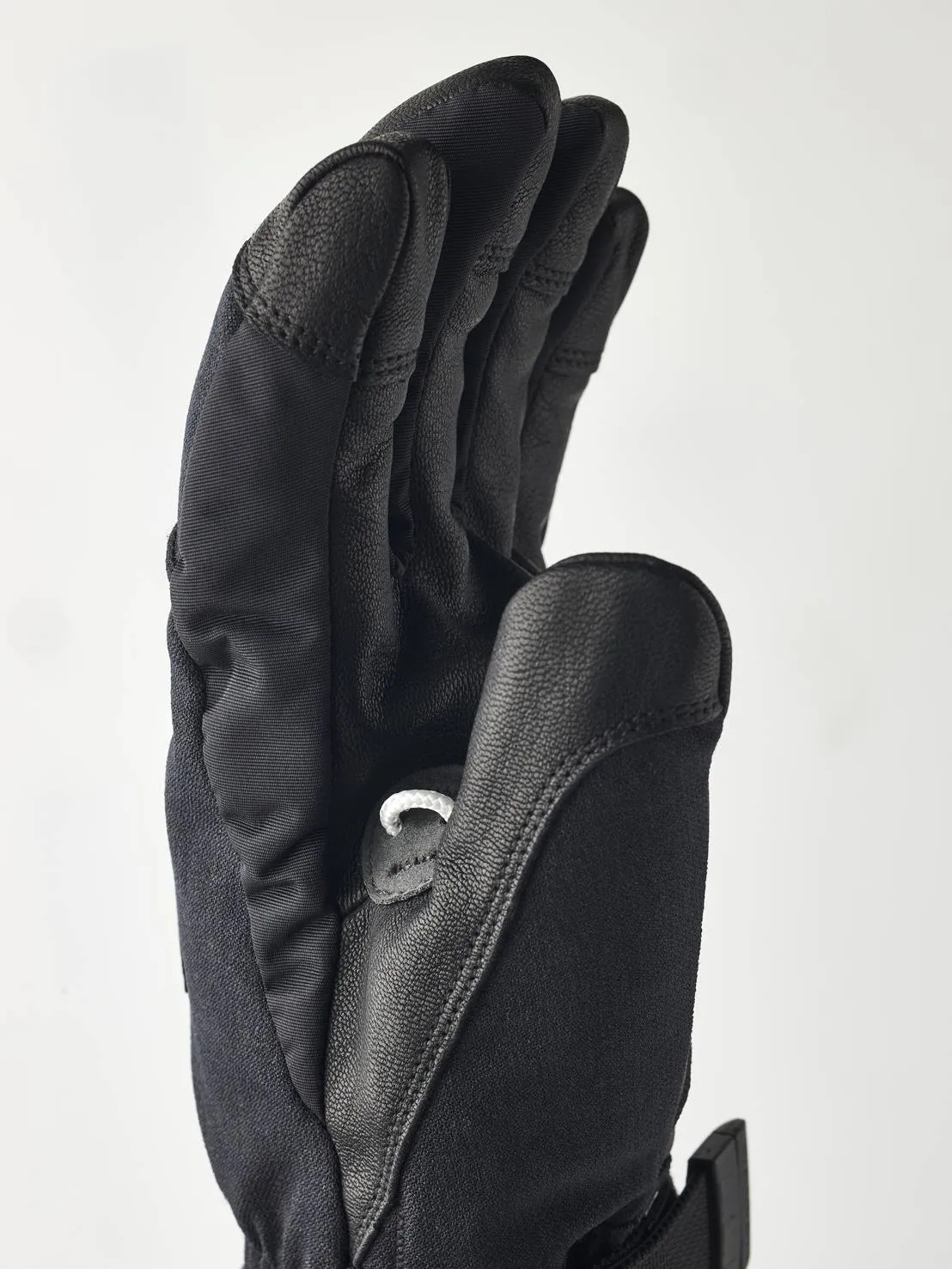
When it comes to the grip, it’s all about length and diameter. A long foam grip allows you to simply grip deeper on steep terrain instead of wrapping your hand around it. Women’s and children’s grips are generally slimmer. And the strap: On the piste, it provides support and power transfer; off-piste, it’s better to leave it off. In the event of a fall or an avalanche, you’ll want to get rid of the pole immediately. Models with a removable strap or a release system handle this elegantly—we’ve written a separate article explaining how this works with gloves that have a trigger system.
Buying Ski Poles: Aluminum, Carbon, or Bamboo
Aluminum is the standard choice: affordable, durable, and easy to repair. However, it bends if it takes too much of a beating, and then it stays bent. Carbon is lighter and stiffer, costs more, and in extreme cases breaks rather than bending. And then there’s a third option, which is new on our shelves.
KANG Bamboo: hand-shaped in Åre
KANG is a Swedish brand with a workshop in Åre, and its Bamboo models are made of 100 percent bamboo. This isn’t just a gimmick: bamboo bends under load and springs back where aluminum would snap, and it absorbs impacts noticeably better. The shafts measure 16 to 18 mm in diameter, are hand-shaped, and weigh approximately 245 g each at 120 cm. No two pairs are alike; each pole displays its own unique grain pattern.
- √ Bamboo Freeride: 35 cm EVA grip, 90 mm Rider’s basket, removable strap, CHF 149
- √ Bamboo All-Mountain: 260 g, 55-mm baskets, lengths from 100 to 135 cm, CHF 139
- √ Both are fixed-length poles—so be sure to determine the correct length beforehand
The longer grip is what makes all the difference in the backcountry. When traversing, you simply grip the pole 15 cm lower instead of re-gripping it. You’ll find the colors Black, Beige, Greige, and Pink on the KANG brand page.
Adjustable ski poles: the Recycled 22 Adjustable
If you want to use a long pole on the ascent and a short one on the descent, choose a telescoping pole. The KANG Recycled 22 Adjustable is built exactly for that: a 22 mm upper section for stability, a 19 mm lower section, and infinitely adjustable from 100 to 140 cm. The shaft is made of recycled aluminum, the production of which requires up to 95 percent less energy than primary aluminum. Weighing about 250 g per pole, it remains light enough even for long tours, and when retracted to 100 cm, it fits into any pole loop on a backpack.
Adjustable models are the all-around choice if you want to use one pair for the entire season. If you ski exclusively on the slopes, fixed-length poles are lighter and more affordable—one less adjustment means one less potential source of error. You’ll find the full selection under “Ski Poles”; pure piste models are listed under “Ski Poles,” and the telescoping versions under “Touring Poles.”
Freeride, Ski Touring, and Kids
For freeride skis, the simple rule is: large basket, removable strap, and slightly shorter. On ski tours, adjustability is key, along with a grip that won’t slip even when wearing thick gloves. And for kids, the same applies as for adults—only faster: they’ll outgrow the pole before it breaks. It’s better to remeasure briefly every season than to ski with poles that are too short for a whole year. In addition to KANG, we carry the classics from Leki, as well as Black Crows, Union, and Scott.
By the way: When you check your poles at the start of the season, take a look at your skis too. Warped edges and a dry base take more out of your skiing enjoyment than a few centimeters of pole length. Our ski service takes care of this in the workshop, including a binding test on a calibrated test stand.
Frequently Asked Questions About Ski Poles
What ski pole length do I need?
Turn the pole upside down, grip it below the basket, and rest your upper arm against it. Your elbow should form a right angle. As a guideline: for children under 170 cm tall, 115 cm; for those between 170 and 178 cm, usually 120 cm; and for those 178 cm and taller, 125 cm. In deep snow, many opt for poles that are 5 cm shorter.
Are adjustable ski poles better than fixed-length poles?
Not better, but more flexible. For ski tours and varied terrain, adjustable poles have a clear advantage. On the slopes, a fixed-length pole is lighter, cheaper, and has one less clamp that could get stuck.
How durable is bamboo compared to aluminum?
More than sturdy enough for the slopes and freeriding. Bamboo bends under load and springs back, whereas aluminum bends and stays bent. However, it’s not suitable for racing poles—for that, there are aluminum and carbon poles with protectors.
Should I use the strap when skiing off-piste?
Better not. Off-piste, you want to be able to let go of the pole immediately in the event of a fall or an avalanche. That’s why good freeride poles have a removable strap or a system that releases when pulled.
Which ski poles for kids?
The same rules apply, just with a slimmer grip and a shorter length. Children grow quickly, so be sure to remeasure every season. A pole that’s too long forces the arm upward and throws off the entire body posture.