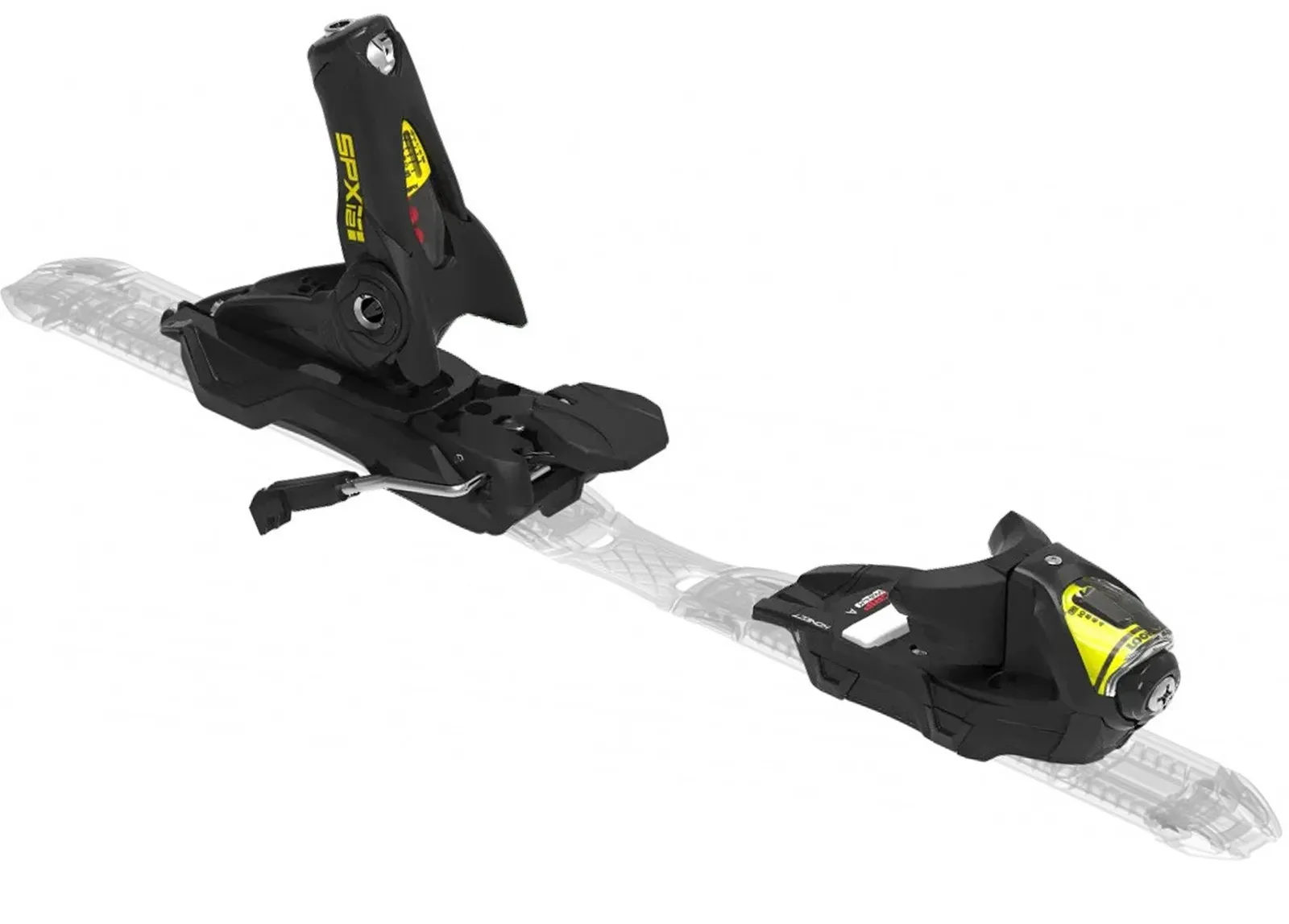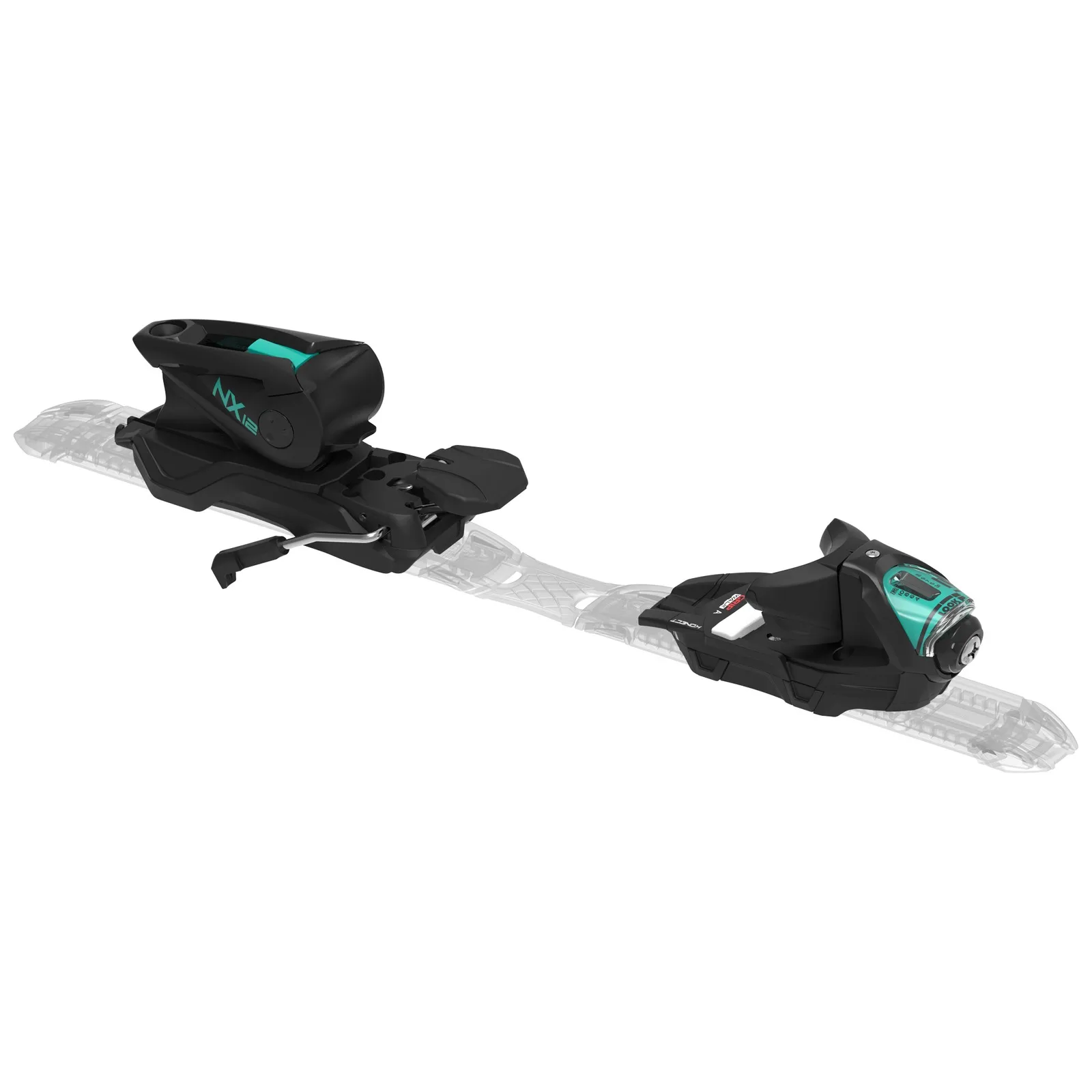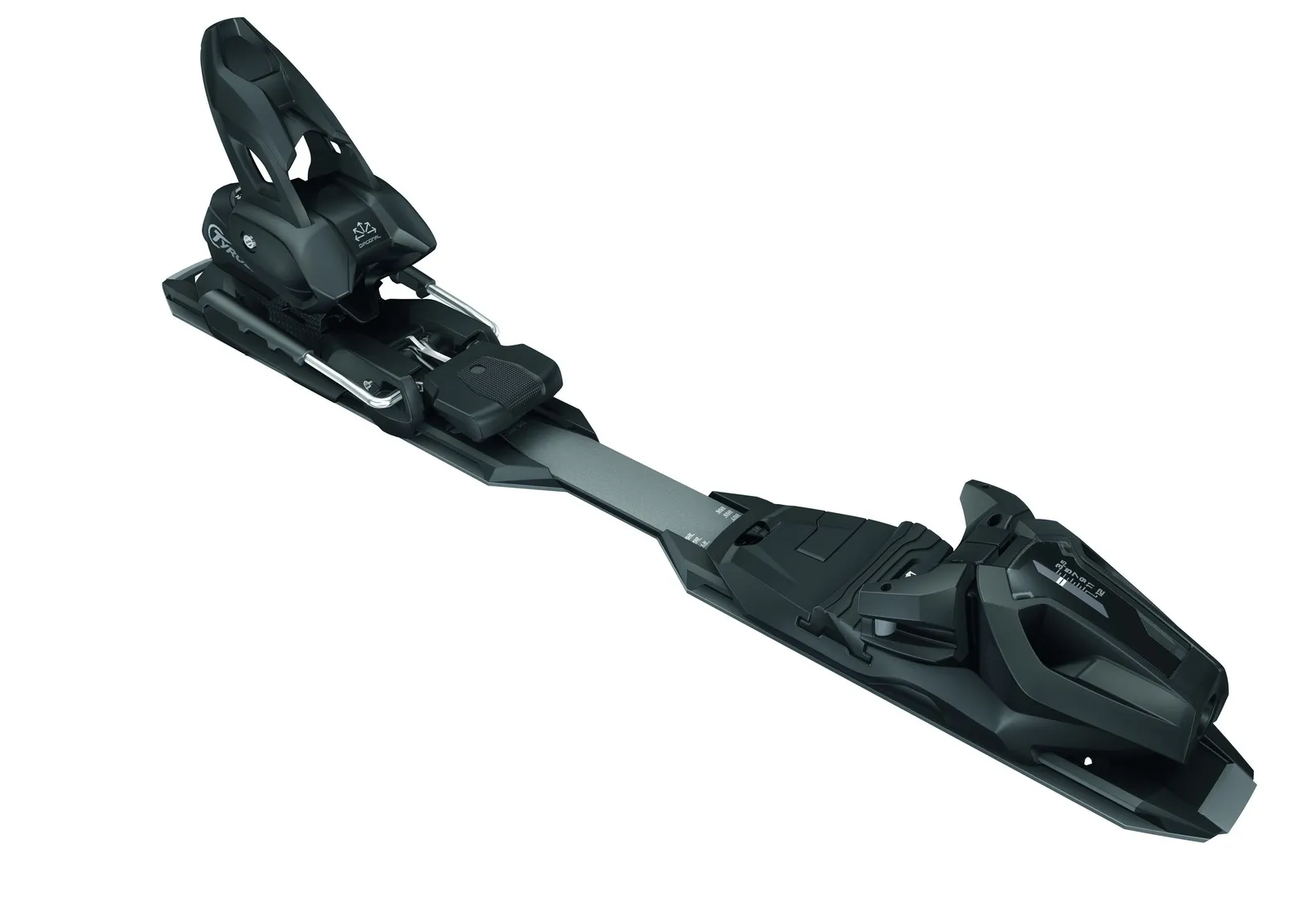
The Adjusting your ski bindings is the most unassuming part of your gear—and at the same time, the most important. It determines whether your ski will release in a fall or whether your knee will have to absorb the impact. Nevertheless, for many people, the settings remain unchanged for years, even though their weight, boots, or skiing style have long since changed.
The value that everything revolves around is called the Z-value. It describes the torque at which the binding releases. If set too low, it releases on the first hard turn; if set too high, the ski stays attached to your foot at the crucial moment. Both are dangerous, and you can’t tell which is which just by looking at the binding from the outside.
Adjusting Ski Bindings: What the Z-Value Really Means
The Z-value isn’t a number you choose based on gut feeling. It’s calculated according to the ISO 11088 standard using several specifications and then verified on a testing machine. Depending on the model, the scale ranges from around 0.75 for children to over 14 in racing.
These specifications determine your Z-value
- √ Body weight – the most significant single factor
- √ Height—together with weight, this determines the basic classification
- √ Age – for those under 10 and 50 and older, the setting is adjusted one notch lower
- √ Ski boot sole length in millimeters, not the boot size
- √ Skier types 1 through 3 – cautious, moderate, or sporty skiing
Choosing skill level 3 just because it sounds sportier is the most common mistake. The rating describes how you actually ski, not how you perceive yourself. If you’re in doubt and choose a level too high, you’re eliminating the very safety margin the binding was designed to provide.
Why sole length is so important
The sole length is listed in millimeters on the side of the heel of your ski boot, for example, 305 mm. It has nothing to do with the Mondopoint size. Two boots in size 27.5 can differ by five to ten millimeters depending on the model, and it is precisely this difference that alters the leverage with which the binding operates. If you change your ski boots, the binding must therefore always be readjusted—even if the new boot has the same size number.
Adjustments Should Be Tested
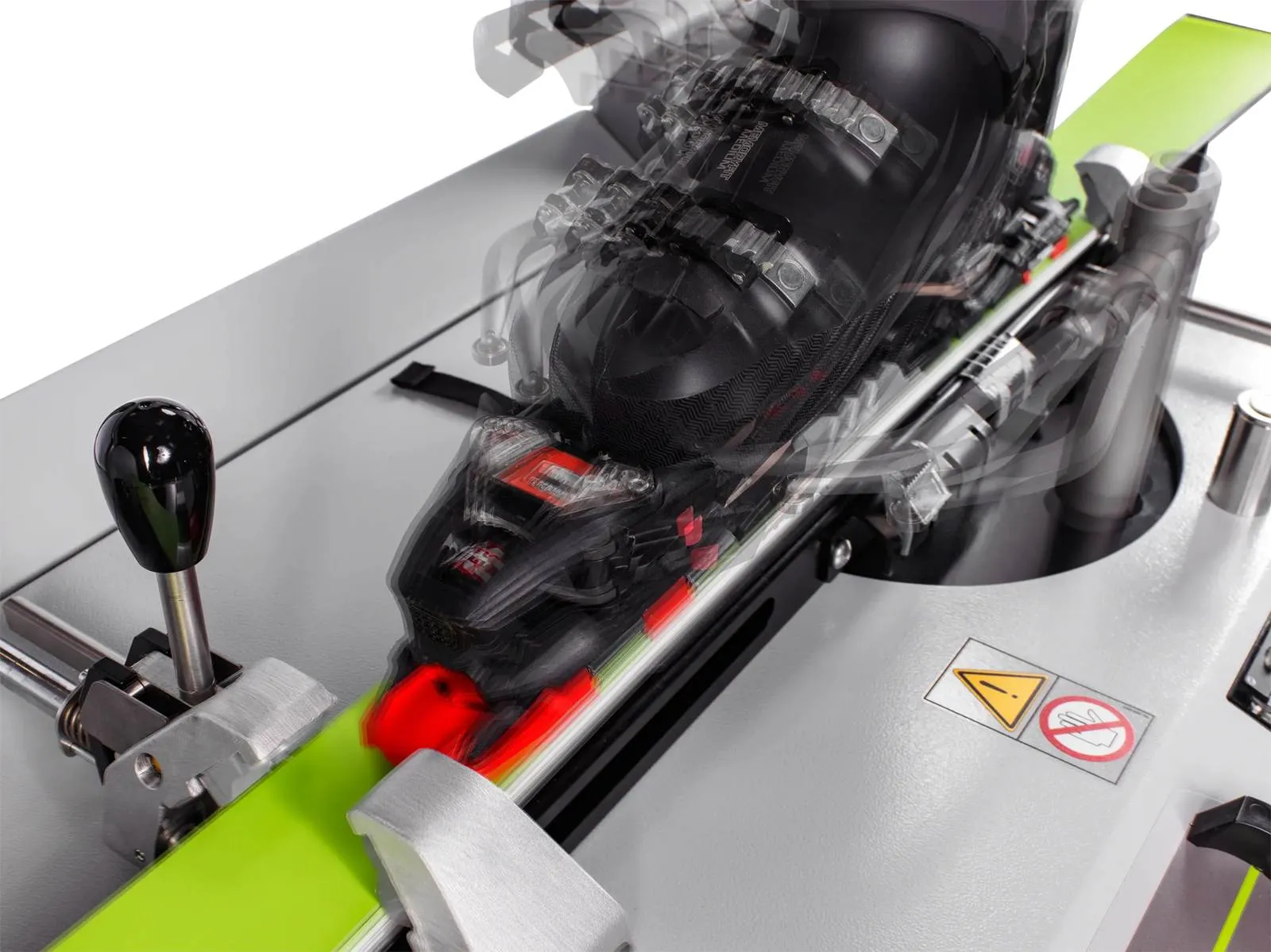
The calculated number is only half the battle. What the scale reads may not correspond to what the spring actually delivers. Old bindings wear out, springs lose tension, and dirt and corrosion alter the release behavior. That’s why the binding is measured on a testing device after adjustment: It rotates the boot out of the binding in a controlled manner and records the actual torque during rotational and forward release. The adjustment is only valid once the measured value falls within the tolerance range. This is exactly the kind of measurement you can’t replicate at home—which is why it belongs in the shop.
When you need to have your bindings re-inspected
- √ New ski boots or a different boot model
- √ A weight change of more than about five kilograms
- √ For children, every season, because their weight and sole length grow as they do
- √ After a hard fall in which the binding released
- √ For bindings that are about ten years old or older, or if the manufacturer no longer approves them
- √ Before the first day of skiing of the season, along with ski service
GripWalk, alpine, or touring—the sole standard must be compatible
In addition to the Z-value, the sole standard determines whether the boot and binding are even compatible. Alpine soles according to ISO 5355 have a flat, hard contact surface. GripWalk soles are rounded at the front and offer better traction, but they require a binding with GW approval—which is why you’ll see the abbreviation “GW” in many product names. Touring soles compliant with ISO 9523, on the other hand, are only compatible with models approved for them. A combination that the manufacturer does not approve can often be mounted, but the release behavior is then no longer guaranteed. If in doubt, ask before ordering a ski binding.
Finding the Right Binding
For everyday on-piste skiing, alpine ski bindings from Look, Marker, Tyrolia, and Atomic cover virtually every Z-range, usually with factory-approved GripWalk compatibility. For those who ski off-piste, touring bindings offer pin and frame systems, and Telemark bindings are still available for classic heel-out skiing. If the binding fits the boot and the Z-value is measured correctly, you’ve taken care of the bulk of your safety gear—the rest is protective gear and a pair of skis that suit you.
Frequently Asked Questions About Adjusting Ski Bindings
Can I adjust my ski bindings myself?
The scale can be adjusted with a screwdriver—anyone can do it. What you can’t do at home is measure the release force. Without a testing device, you won’t know if the binding releases at the value shown on the scale—and that’s exactly what matters. Plus, in the event of an accident, a binding you’ve adjusted yourself could be an issue with your insurance.
How do I determine my sole length?
It’s stamped on the side of the heel or on the sole of your ski boot—a three-digit number in millimeters, such as 297, 305, or 316. If the number is no longer legible, the service center can measure it in just a few seconds.
How often should the binding be inspected?
Once per season is a good schedule; for children, it’s essential. In between, check whenever your boots, weight, or skiing style change, or if the binding has released.
Is a higher Z-value safer because it prevents the ski from coming off?
No. A value that is too high prevents the binding from releasing during a fall. The force is then transferred to the knee instead of the snow. The correct value is the calculated and measured one—not the highest value at which the ski remains attached.
Does every ski boot fit into every binding?
No. The key factor is the sole standard: ISO 5355 for alpine and GripWalk, and ISO 9523 for touring. Many modern bindings bear the abbreviation “GW” and are approved for alpine and GripWalk soles, but not automatically for touring soles. Approval is specified in the manufacturer’s list, not based on intuition.